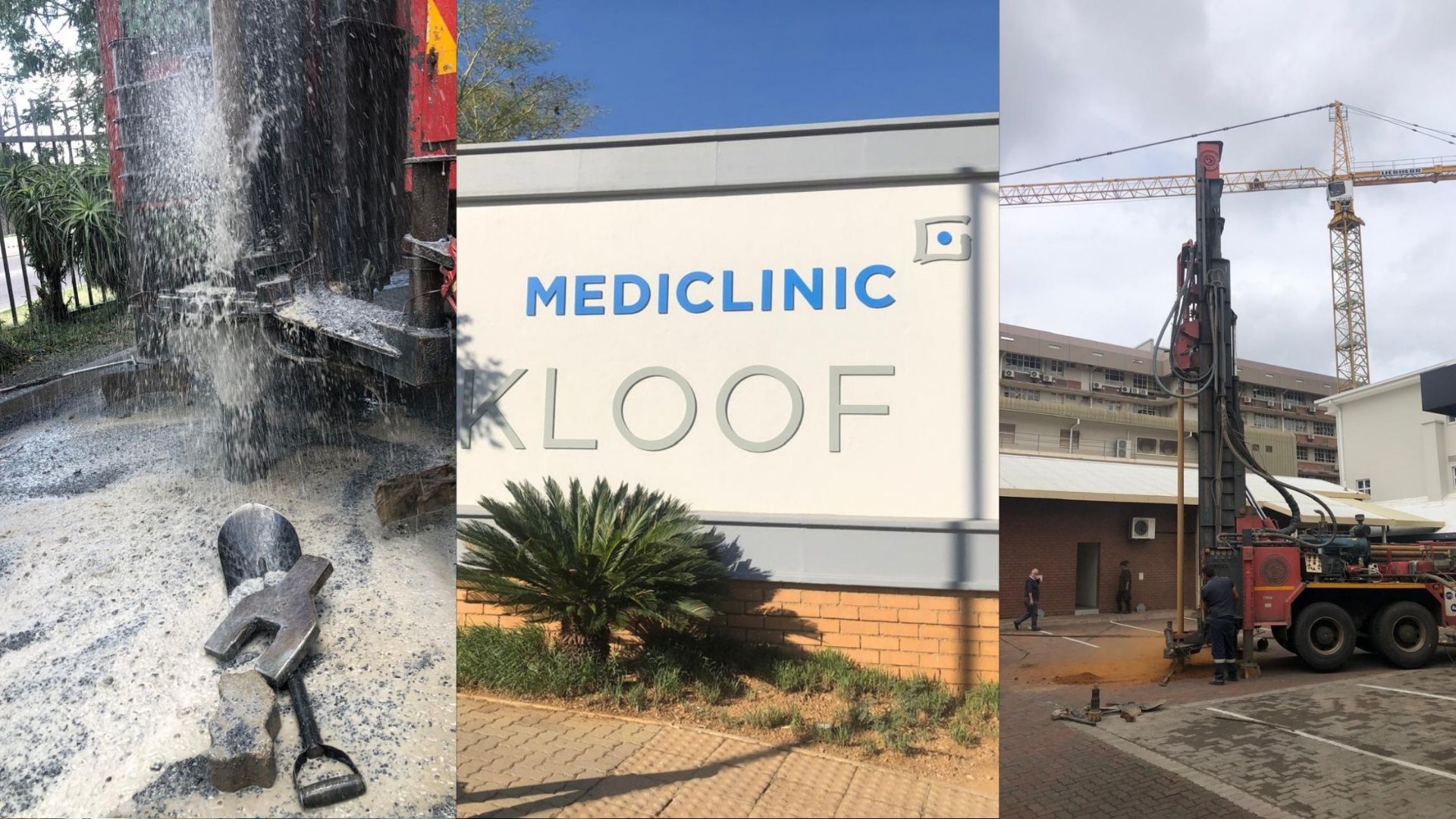
Access to a reliable, independent water supply has become one of the most valuable assets a Johannesburg property can have. With municipal supply under increasing pressure and planned maintenance interruptions becoming a regular feature of urban life, more homeowners, estate managers, and business operators are turning to borehole drilling as a long-term solution.
Johannesburg sits above a rich network of groundwater-bearing rock formations, making borehole drilling a highly viable option for a wide range of properties across the city. A professionally installed borehole can provide sustainable, independent water access for 50 to 80 years — with relatively low ongoing maintenance costs and significant savings on municipal water bills over time.
This guide covers everything you need to know about borehole drilling in Johannesburg — from the geological conditions and regulatory requirements through to what the installation process looks like and what you can expect to invest.
Why Borehole Drilling Makes Sense for Johannesburg Properties
Johannesburg is uniquely positioned for borehole use. The city and its surroundings overlie several productive aquifer systems, and groundwater has historically been used across the region for agricultural, industrial, and residential purposes. With the City of Johannesburg actively encouraging borehole use as a supplement to municipal supply, the timing for property owners to invest in groundwater access has never been better.
Beyond supply security, the financial case is compelling. Studies show that commercial properties have recovered their full borehole installation investment within a few years through savings on municipal water tariffs — with ongoing annual savings running into the tens of thousands of rands depending on consumption levels.
For residential estates and developments, boreholes also provide a shared infrastructure asset that reduces the estate's dependence on municipal supply, adds long-term value to the development, and gives estate managers greater control over water availability for common areas, irrigation, and backup supply.
Understanding Johannesburg's Groundwater Geology
Successful borehole drilling in Johannesburg depends significantly on understanding the local geology. The region is underlain by a combination of rock types — including granite, quartzite, and various sedimentary formations — each with different groundwater-bearing characteristics.
In most parts of Johannesburg, groundwater is found in fractured rock aquifers rather than porous sedimentary layers. This means that the location and orientation of natural fractures in the rock largely determines where productive boreholes can be sunk. A thorough hydrogeological survey before drilling is therefore not optional — it is the foundation of a successful installation.
One important consideration for Johannesburg property owners is that the City of Johannesburg does not approve borehole applications in dolomitic areas. Dolomite is a type of limestone that can become unstable when water moves through it, creating sinkhole risk. Before any drilling takes place, a professional assessment should confirm that your property falls outside these restricted zones.
Boreholes in Johannesburg are typically drilled to depths of 60 to 80 metres, although depths of up to 200 metres are not uncommon depending on the water table and required yield. The deeper the borehole, the more robust the groundwater source — but also the higher the drilling cost per metre.
Permits and Regulatory Requirements for Borehole Drilling in Johannesburg
Borehole drilling in the City of Johannesburg is regulated under Section 14(1)(b) of the CoJ's Land Use Scheme, which requires written consent from the City before any borehole may be drilled on private property. As Moneyweb reports, the approval process involves submitting a written notice of intent to drill, completing an environmental assessment, and notifying all relevant stakeholders — including City Power, Johannesburg Water, Emergency Management Services, and the Johannesburg Metropolitan Police Department.
Written notice must be submitted to the municipality at least 14 days prior to the planned drilling date. The application is then reviewed by the city's engineering departments to confirm the proposed borehole will not affect existing underground infrastructure.
At a national level, water use from a borehole for reasonable domestic purposes generally does not require registration under the National Water Act. However, boreholes producing larger volumes for commercial or industrial use may require formal registration or licensing with the Department of Water and Sanitation. A qualified water practitioner can guide you through the relevant requirements for your specific application.
Working with an experienced borehole drilling company that understands Johannesburg's specific regulatory environment ensures your installation is fully compliant from day one — protecting your investment and avoiding any legal complications.
The Borehole Drilling Process From Start to Finish
A professional borehole installation in Johannesburg follows a structured process designed to maximise yield, ensure water quality, and deliver a system that performs reliably for decades. Here is what the process looks like from initial enquiry to operational system.
Step 1 — Site Assessment and Hydrogeological Survey
The first step is a thorough assessment of your site, including geological mapping, dolomite risk evaluation, and identification of the most productive drilling location. This survey significantly improves the likelihood of a successful outcome and avoids costly dry boreholes.
Step 2 — Permit Application and Stakeholder Notification
Once the site has been assessed and a suitable location identified, the permit application is submitted and all required stakeholders are notified. This process typically takes a minimum of 14 days and should be factored into your project timeline.
Step 3 — Drilling and Casing Installation
Drilling in Johannesburg typically takes between one and three days, depending on depth and geological conditions. Steel casing is installed to protect the borehole structure and prevent contamination from surface water. According to 2026 pricing guides, drilling in Johannesburg costs between R500 and R1,500 per metre, with casing adding R400 to R700 per metre.
Step 4 — Yield Testing and Water Quality Analysis
Once drilling is complete, a yield test is conducted to determine the borehole's sustainable output. Water samples are sent for laboratory analysis against SANS 241 standards. Results determine whether treatment is required before the water is used for domestic or operational purposes.
Step 5 — Pump Installation and System Commissioning
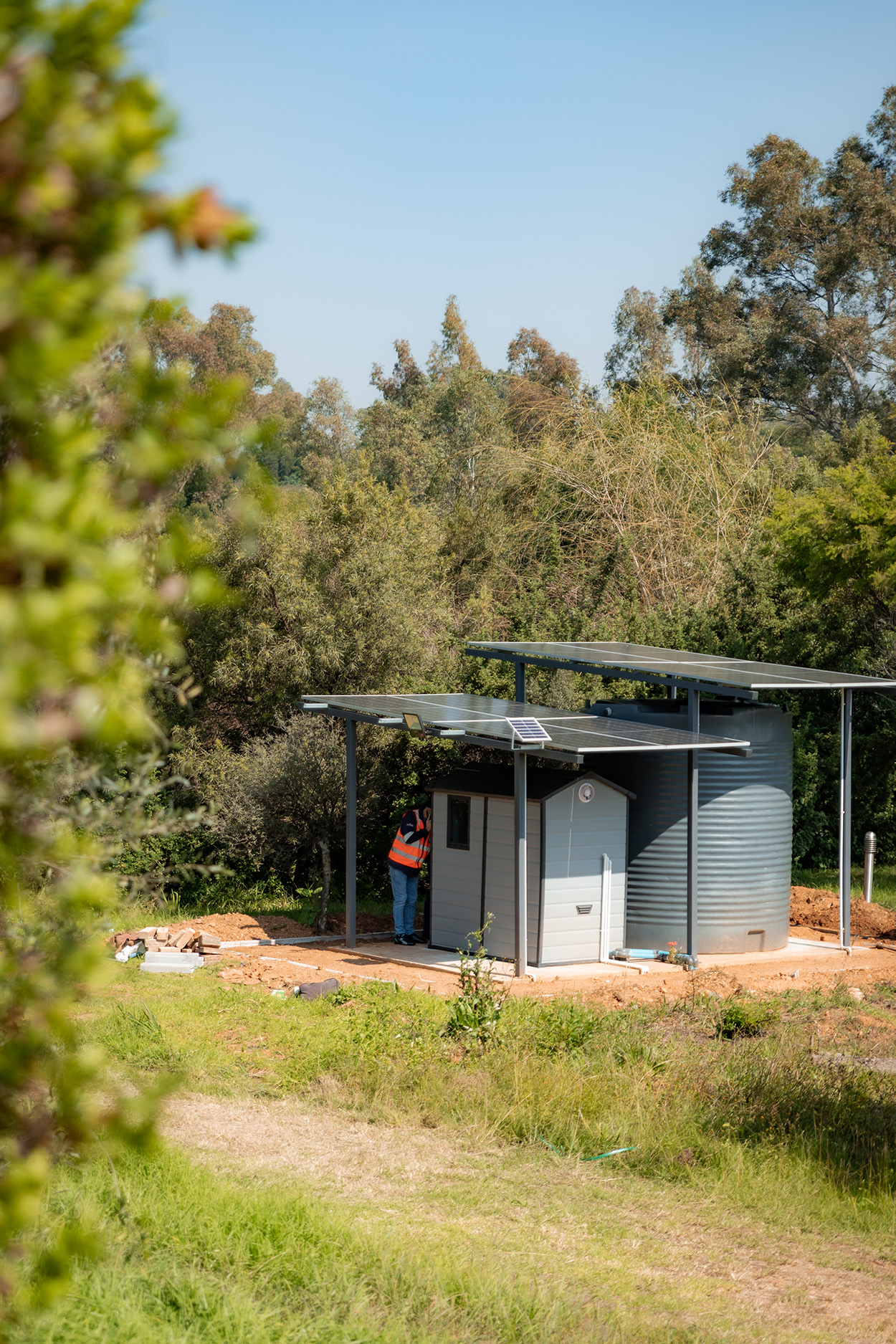
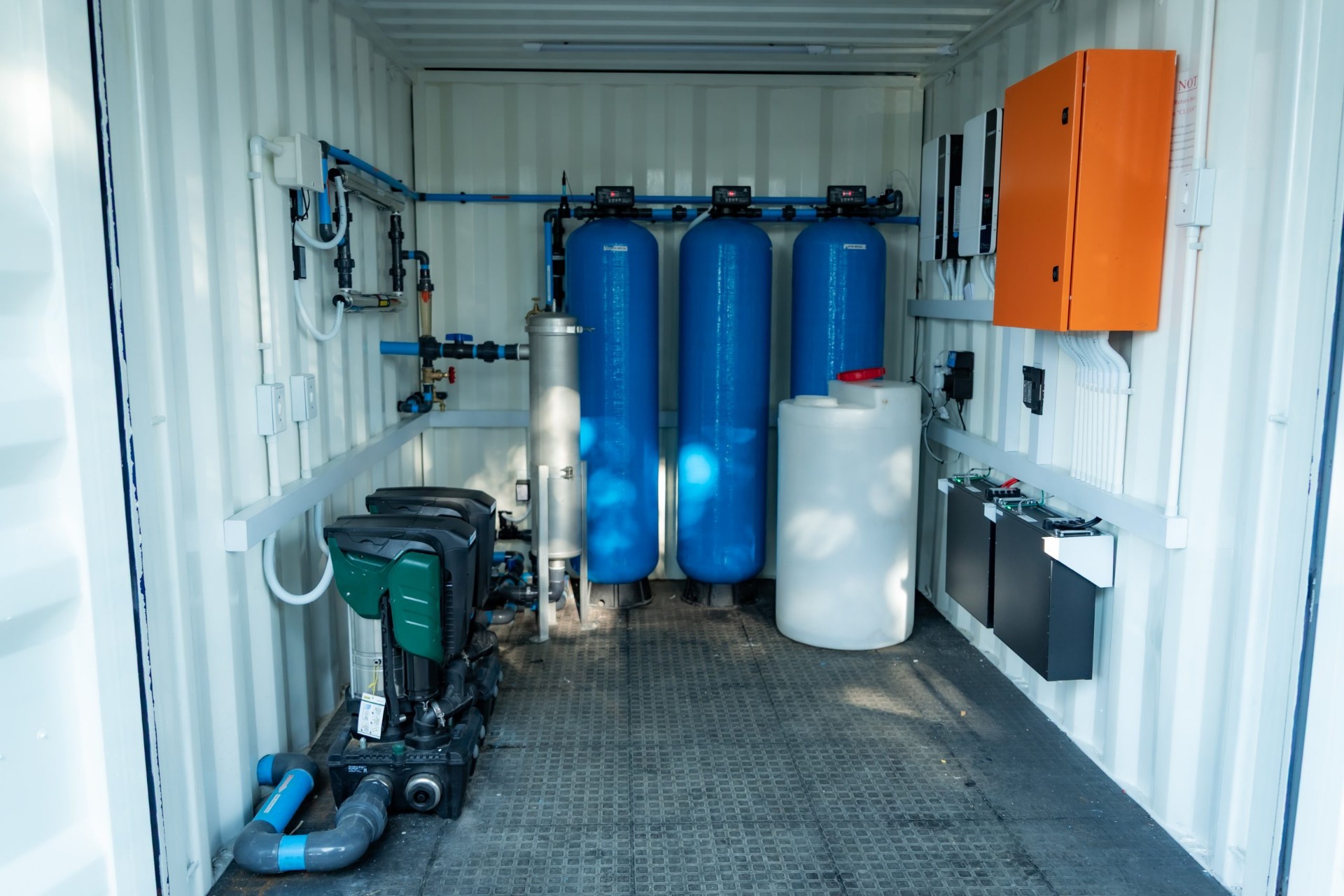
The final stage involves installing an appropriately sized pump, connecting pipework, and commissioning the full system. Pump costs in Johannesburg range from R5,000 to R25,000 depending on capacity and depth. For properties looking to remove load shedding as a risk factor, a solar-powered pump system can be integrated at this stage.
What Does Borehole Drilling in Johannesburg Cost in 2026
A complete borehole installation in Johannesburg — including drilling, casing, pump, yield testing, and water quality analysis — typically costs between R60,000 and R120,000, according to 2026 pricing data. The total investment varies based on the following factors.
Drilling depth — Johannesburg boreholes are commonly 60 to 80 metres deep, with deeper installations costing more per metre. Geological conditions — harder rock formations require more time and specialised equipment. Pump selection — submersible pump costs range from R5,000 to R25,000 depending on capacity. Water treatment — if testing reveals elevated minerals or microbiological parameters, treatment equipment adds to the total. Site accessibility — constrained urban sites may require specialist equipment or additional mobilisation costs.
Annual maintenance costs for a Johannesburg borehole system typically range from R1,000 to R2,500, covering pump inspections, yield checks, and routine servicing. Regular SANS 241 water quality testing — recommended at least annually — adds R1,500 to R3,000 per test cycle.
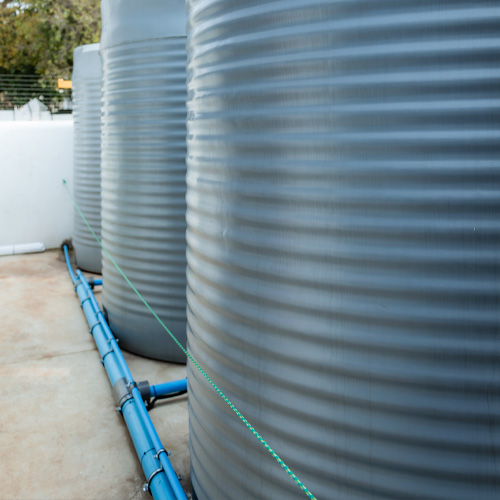
For properties wanting integrated water storage alongside their borehole, modular steel water tanks can be installed to hold a bulk reserve that ensures supply continuity even during periods of low borehole yield or pump maintenance.
The Long-Term Value of a Professionally Installed Borehole
A borehole is not just a short-term solution to a supply disruption — it is a long-term infrastructure asset that adds measurable value to your property. When designed, drilled, and maintained correctly, a borehole system provides decades of independent water access at a fraction of the ongoing cost of municipal supply.
For residential estates, the benefit extends beyond individual properties. A shared borehole system gives estate managers control over irrigation, common area supply, and emergency backup — all without relying on municipal infrastructure. Pair your borehole with professional water monitoring and compliance services, and you have a fully managed, SANS 241-aligned water system that protects residents and supports long-term property value.
The key to realising this value is professional installation. A poorly sited, under-cased, or inadequately tested borehole will underperform from the start and cost significantly more to remediate than it would have to install correctly in the first place. iWater Management approaches every borehole project as a complete water system — from geological assessment and permitting through to pump installation, treatment integration, and ongoing management.
Frequently Asked Questions
Do I need a permit to drill a borehole in Johannesburg?
Yes. Section 14(1)(b) of the City of Johannesburg's Land Use Scheme requires written consent from the CoJ before drilling. You must submit a written notice of intent at least 14 days before the planned drilling date and notify relevant stakeholders including City Power and Johannesburg Water.
How deep does a borehole need to be in Johannesburg?
Most boreholes in Johannesburg are drilled to between 60 and 80 metres, though depths of up to 200 metres may be required depending on the location, geology, and required yield. A hydrogeological survey before drilling helps determine the optimal depth for your specific site.
How much does borehole drilling cost in Johannesburg in 2026?
A complete borehole installation in Johannesburg — covering drilling, casing, pump, yield testing, and water quality analysis — typically costs between R60,000 and R120,000 in 2026. Annual maintenance costs range from R1,000 to R2,500, with water quality testing adding R1,500 to R3,000 per cycle.
Can I drill a borehole anywhere in Johannesburg?
Not everywhere. The City of Johannesburg prohibits borehole drilling in dolomitic areas due to the risk of ground instability and sinkholes. A professional site assessment will confirm whether your property falls within a dolomite-risk zone before any drilling takes place.
How long will a borehole last?
A professionally drilled, cased, and maintained borehole system can provide reliable water access for 50 to 80 years. Regular servicing, pump maintenance, and water quality testing are the key factors that determine long-term system performance.
Ready to Explore Borehole Drilling for Your Johannesburg Property?
iWater Management provides professional borehole drilling services across Johannesburg — from site assessment and permitting through to drilling, pump installation, water quality testing, and long-term maintenance. Get in touch with our team today to discuss your property's water needs.
Contact us today: hello@iwatermanage.co.za | Tel: 010 026 4225 | Get in touch