
A school without water cannot function. Toilets cannot be flushed. Hands cannot be washed. Food cannot be prepared. In South Africa's current water infrastructure environment, this is not a hypothetical scenario — it is a reality that has forced schools in Mpumalanga, Gauteng, Limpopo, the Northern Cape, and other provinces to send children home, disrupt learning schedules, and in some cases, consider temporary closure.
The solution that is gaining traction across South African schools is modular steel water storage — bulk water tanks that provide a reliable on-site reserve capable of carrying a school through municipal supply interruptions of days or even weeks. Combined with borehole access and professional water treatment, these systems give school management teams the water security they need to keep classrooms open and learners learning, regardless of what is happening to municipal infrastructure.
This guide explains why South African schools are investing in modular steel water tanks, what the tanks provide, how they are sized and installed, and what a complete school water independence system looks like in practice.
Why South African Schools Are Increasingly Vulnerable to Water Supply Disruptions
The scale of South Africa's water infrastructure challenge is well documented. A government audit released in April 2026 confirmed that 47% of municipal water systems are now classified as critical, with only 8% rated as good or excellent. Schools across South Africa are directly affected — including Breyten Primary School in Mpumalanga, where the principal was on the verge of closing the school because there was no longer enough water to flush the toilets for more than 600 learners.
In Midrand, Gauteng, schools sent children home after extended water supply failures in February 2026, disrupting learning across entire communities. With water security now acknowledged as posing a similar if not greater threat to South Africa's quality of life than load shedding, the message for school management teams is clear: depending entirely on municipal supply is no longer a viable strategy.
Why Schools Face Particular Risk
• High simultaneous demand — Hundreds of learners using ablution facilities, food preparation services, and hygiene stations simultaneously creates significant peak demand that cannot be served by tankers or alternative temporary solutions
• Duty of care obligations — Schools have a legal and ethical obligation to provide a safe and hygienic environment for learners; water supply failure directly compromises this obligation
• Exam period vulnerability — Water outages during exam periods create significant disruption to assessment schedules and learner performance
• No operational flexibility — Unlike a business that can postpone operations, a school cannot delay the school day indefinitely without broader community and educational consequences
What Modular Steel Water Tanks Provide for Schools
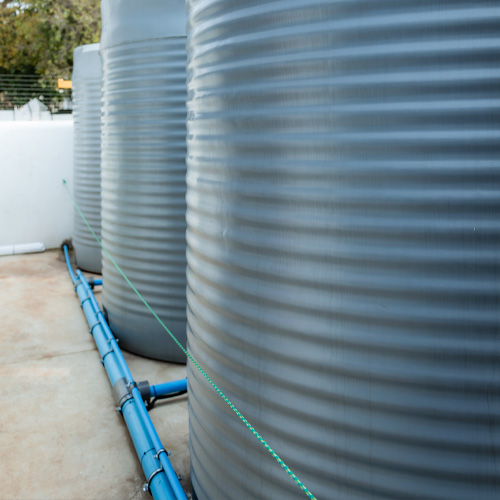
A modular steel water tank is a bulk water storage system built on-site from prefabricated galvanised steel panels. iWater Management's modular steel water tanks are engineered for South African conditions — UV-resistant, structurally robust, and sized to the specific storage requirements of each site. For schools, they provide several critical capabilities.
Multi-Day Water Reserve
A correctly sized tank gives a school a water reserve that covers its full daily demand for a defined period — typically two to five days — without any input from the municipal network or borehole. This reserve bridges the gap during planned maintenance outages, emergency repairs, and unplanned supply failures, allowing the school to continue operating normally throughout.
Independent Supply When Paired With a Borehole
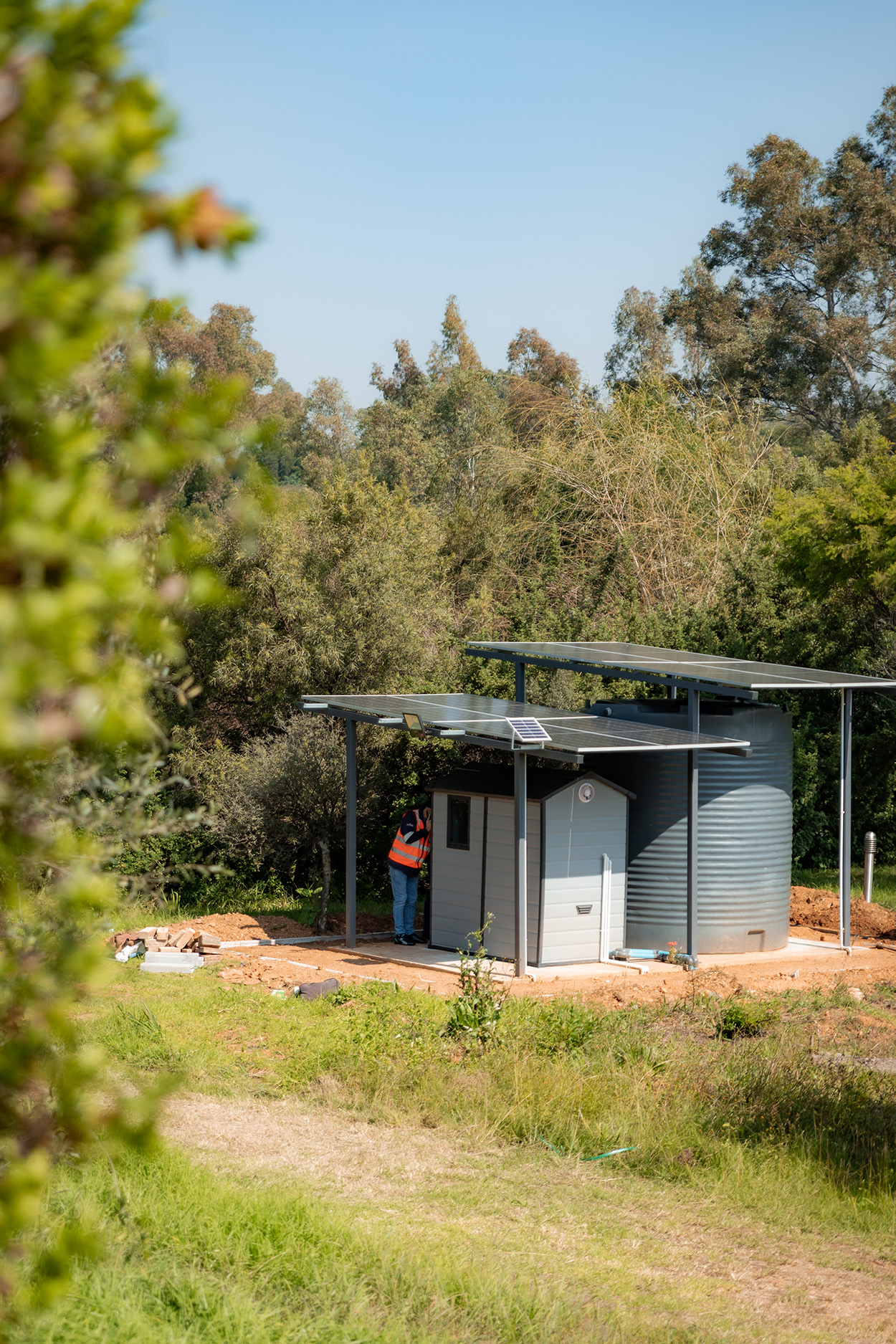
When connected to a borehole drilling installation, a modular storage tank creates a genuinely independent water system. The borehole provides the source; the tank stores the treated output; and the school draws from the tank as needed. This combination removes the school's dependency on municipal supply entirely for day-to-day operations, with the municipal connection serving only as a secondary backup.
Safe, Hygienic Water Storage
Galvanised steel construction prevents UV penetration, eliminating algae growth in stored water. Internal PVC liners are available for potable water applications, ensuring that stored water remains safe and hygienic for the duration of its storage. Steel tanks are also significantly more durable than poly alternatives in exposed outdoor school environments, with service lives of 30 to 40 years.
Scalable to Any School Size
Modular tanks are built on-site from standard panels, meaning they can be configured to any capacity required — from a small primary school requiring 10,000 litres to a large secondary school requiring 100,000 litres or more. They can also be expanded as the school grows, by adding additional panel sections to increase storage capacity without replacing the existing structure.
How to Size a Water Storage Tank for a School
Correct tank sizing is the foundation of an effective school water system. A tank that is too small provides limited protection; a tank that is too large represents unnecessary capital expenditure. The sizing calculation should account for the following:
• Daily water demand — South Africa's Department of Basic Education guidelines recommend a minimum of 25 litres per learner per day for ablution and hygiene purposes; food preparation and staff facilities add to this baseline
• Number of learners and staff — A school of 500 learners and 30 staff members has a minimum daily demand of approximately 13,250 litres at the DoBE guideline rate
• Desired reserve period — A two-day reserve for a 500-learner school requires approximately 26,500 litres; a five-day reserve requires approximately 66,000 litres
• Refill source and rate — If the tank is fed by a borehole, the borehole's yield determines how quickly the reserve is replenished; a higher-yield borehole can maintain a smaller tank effectively
• Seasonal demand variation — Larger school gardens, sports fields, and sanitation demand during hotter months should be factored into peak demand estimates
iWater Management conducts a full site assessment and water demand evaluation before recommending any storage configuration, ensuring that the installed system is correctly sized for the school's actual requirements.
A Complete Water Independence System for South African Schools
A modular steel tank is most effective as part of a complete water independence system rather than as a standalone addition to a municipal connection. The most resilient school water systems combine the following components:
Borehole Drilling for Independent Supply
A professionally sited, drilled, and cased borehole provides the school with a private groundwater source that operates independently of municipal supply. Borehole drilling includes yield testing to confirm the sustainable daily extraction rate, ensuring the system is designed around realistic supply figures. Learn more about iWater's borehole drilling services.
Water Treatment to SANS 241 Standard
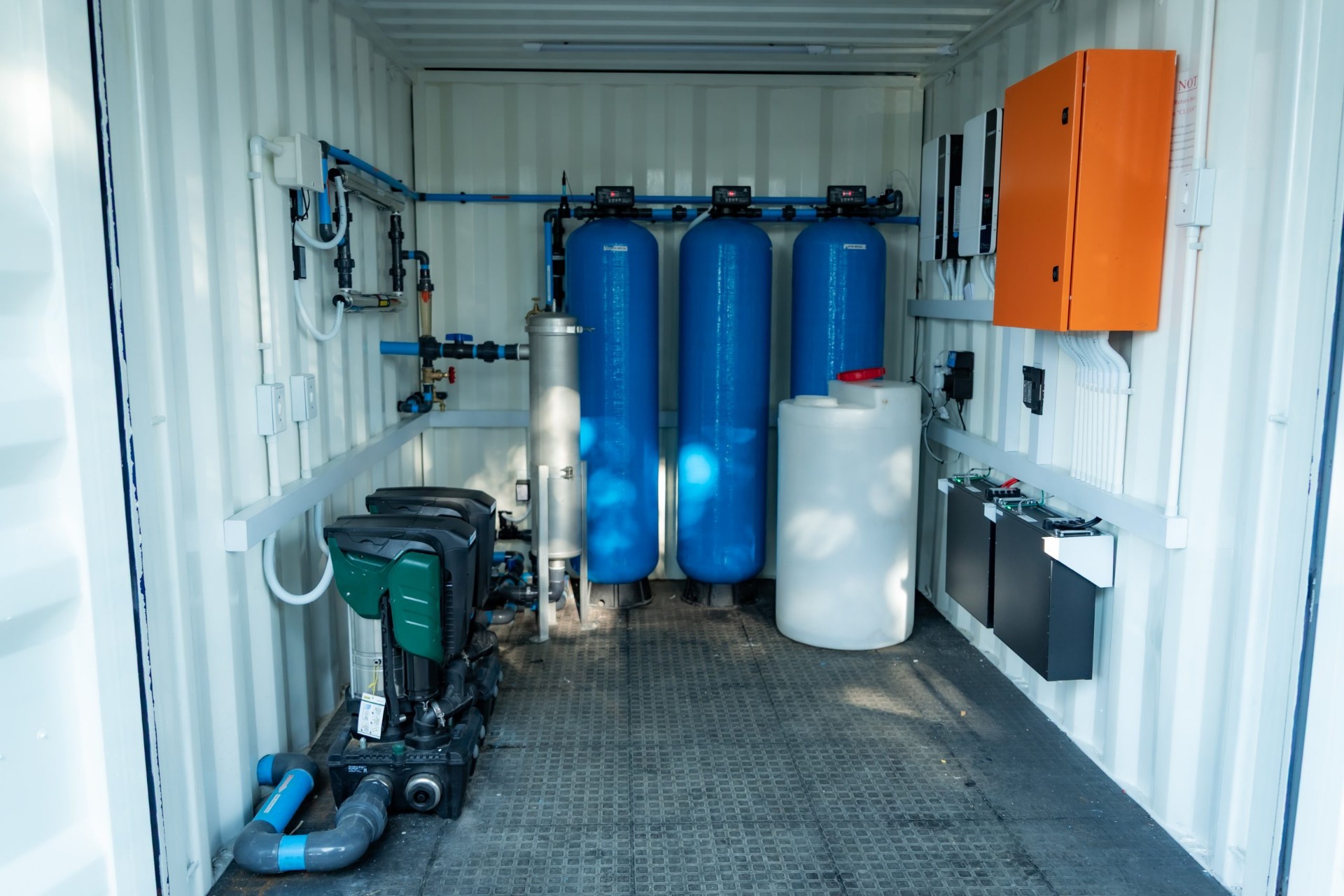
Borehole water must be tested and treated before use by learners or staff. iWater's water treatment and purification solutions address the specific parameters present in each source — including microbiological treatment, iron and manganese removal, and pH correction — delivering SANS 241-compliant potable water at the point of distribution.
Modular Steel Storage Tanks
Treated water from the borehole system fills the storage tank continuously, maintaining the school's reserve at full capacity at all times. The tank feeds directly into the school's internal plumbing network, supplying ablution blocks, kitchen facilities, and any irrigation or outdoor taps.
Ongoing Monitoring and Compliance
Schools have a duty to ensure that the water provided to learners and staff is safe. iWater's water monitoring and compliance services provide scheduled SANS 241 testing, results interpretation, and corrective action recommendations, ensuring ongoing compliance and generating the documentation needed for school governance, health and safety audits, and provincial education department requirements.
Frequently Asked Questions
How large a water tank does a South African school need?
Tank sizing depends on the number of learners and staff, daily water usage, and the desired reserve period. As a baseline, a school of 500 learners requires approximately 13,250 litres per day at the Department of Basic Education's minimum guideline of 25 litres per person. A two-day reserve requires approximately 26,500 litres. iWater Management conducts a full demand assessment before recommending any tank size.
Can a school use borehole water for drinking without treatment?
No. Borehole water must be tested against SANS 241 standards and treated appropriately before it is safe for drinking or food preparation. Treatment requirements vary by location and groundwater quality. iWater Management conducts full water quality analysis and designs treatment systems matched to the specific source water profile of each school.
How long does it take to install a modular steel tank at a school?
Modular steel tanks are assembled on-site from prefabricated panels, which significantly reduces installation time compared to conventional construction. Most school tank installations are completed within one to three days, depending on tank size and site conditions, with minimal disruption to school operations.
Can a school expand its water storage capacity later?
Yes. Modular steel tanks can be expanded by adding additional panel sections to increase capacity as the school grows or as water demand increases. This scalability protects the initial investment and means schools do not need to replace their storage infrastructure as requirements change over time.
Are there any government funding programmes for school water infrastructure?
The Department of Basic Education and provincial education departments have allocated funding for school water and sanitation infrastructure through various programmes, including the Education Infrastructure Grant. School governing bodies and principals should engage their provincial education department to understand available funding streams. iWater Management can support schools with technical specifications and system designs required for funding applications.
Secure Your School's Water Supply Today
iWater Management designs and installs complete water independence systems for South African schools and educational institutions — from borehole drilling and SANS 241-compliant treatment through to modular steel storage tanks and ongoing compliance monitoring. Contact our team to discuss your school's water requirements.
Contact us today: info@iwatermanage.co.za | Tel: 010 026 4225 | Get in touch