Water is not a convenience in a healthcare facility. It is a clinical necessity. From patient care and surgical sterilisation to hand hygiene, wound management, and the safe preparation of food and medication, every aspect of a hospital or clinic's daily function depends on a consistent, clean, and compliant water supply.
In South Africa, where both municipal water supply and grid electricity face well-documented pressures, healthcare facilities are among the most vulnerable institutions when either fails. When load shedding stops the pumps, when municipal supply is interrupted, or when an ageing distribution system delivers water of uncertain quality, the consequences in a clinical environment extend far beyond inconvenience.
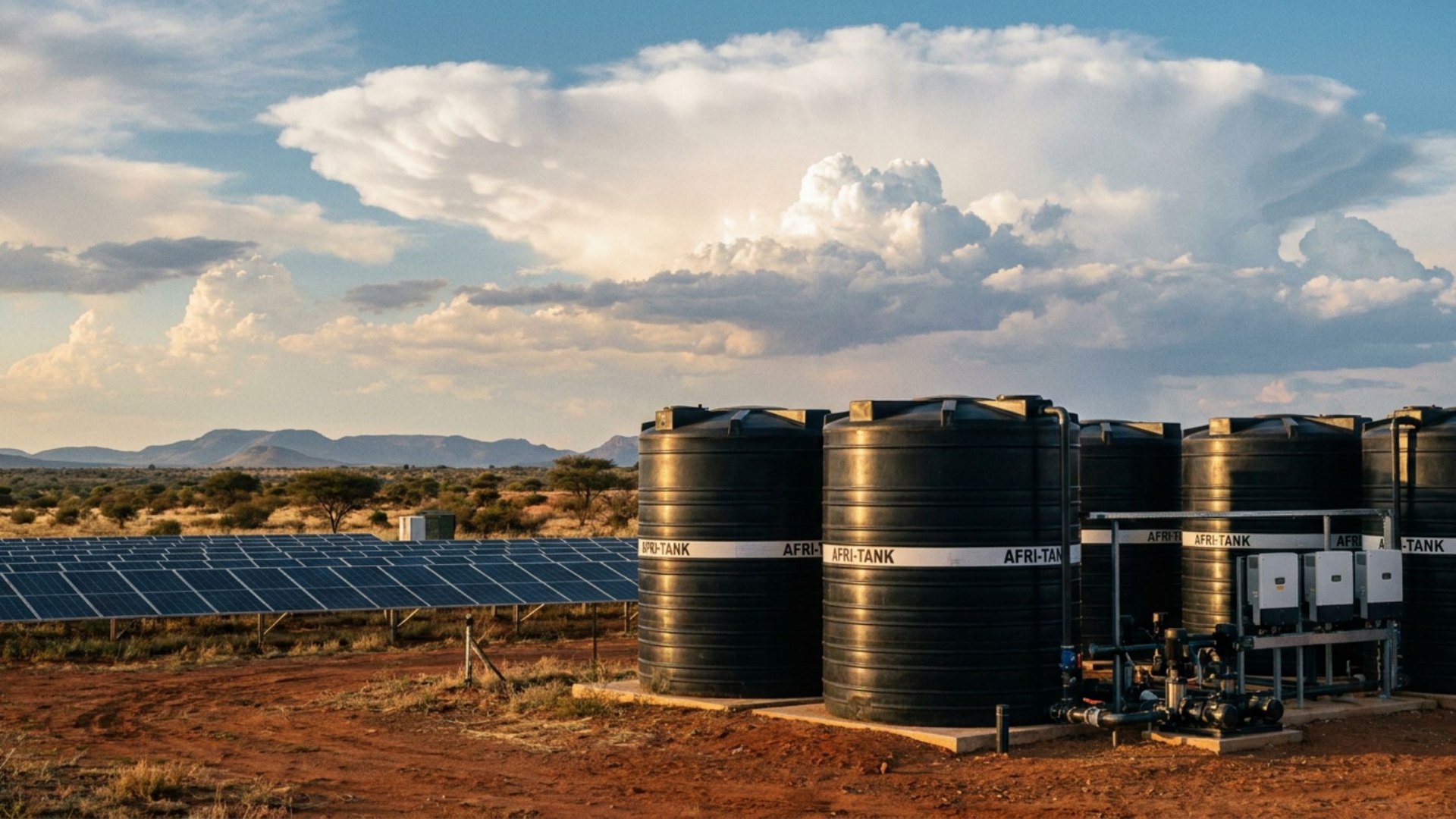
Solar-powered water systems offer healthcare facilities a practical, long-term solution to this challenge — decoupling water supply from both the electrical grid and municipal infrastructure, and delivering consistent, compliant water access regardless of what is happening outside the facility's walls. This article explores why water security matters so profoundly in healthcare settings, and how solar-powered water infrastructure addresses the specific needs of South African hospitals and clinics.
Why Uninterrupted Water Supply Is Non-Negotiable in Healthcare Settings
The connection between water access and patient outcomes is well established. Clean water is the foundation of infection prevention and control, which is one of the most critical functions in any healthcare environment. Without it, sterilisation protocols break down, hand hygiene becomes impossible to maintain at scale, and the risk of healthcare-associated infections rises significantly.
Research published in the South African Medical Journal highlights that when load shedding occurs in healthcare settings, water and sewage systems become further compromised. In cases of prolonged power loss, reservoirs can run dry entirely. Staff lose the ability to sterilise surgical instruments, potentially delaying emergency interventions and elevating the risk of post-operative complications. UV disinfection systems — used in critical care areas to reduce resilient microbes — also go offline during power outages.
For patients undergoing surgery, receiving intensive care, or managing chronic conditions, these disruptions carry direct clinical risk. The compounding effect of unreliable water and unreliable power creates a vulnerability that no healthcare facility can afford to leave unaddressed.
The Load Shedding and Water Supply Connection in South African Healthcare
South Africa's healthcare system has grappled with the effects of grid instability for years. As Zawya reports, while regulations permit larger public hospitals exemption from load shedding, Eskom has acknowledged that it is technically impossible to isolate most healthcare facilities from rolling blackouts. The cost of running diesel generators as an alternative is substantial — one private hospital group reported an average monthly expenditure of R800,000 on generator fuel alone during high load shedding stages.
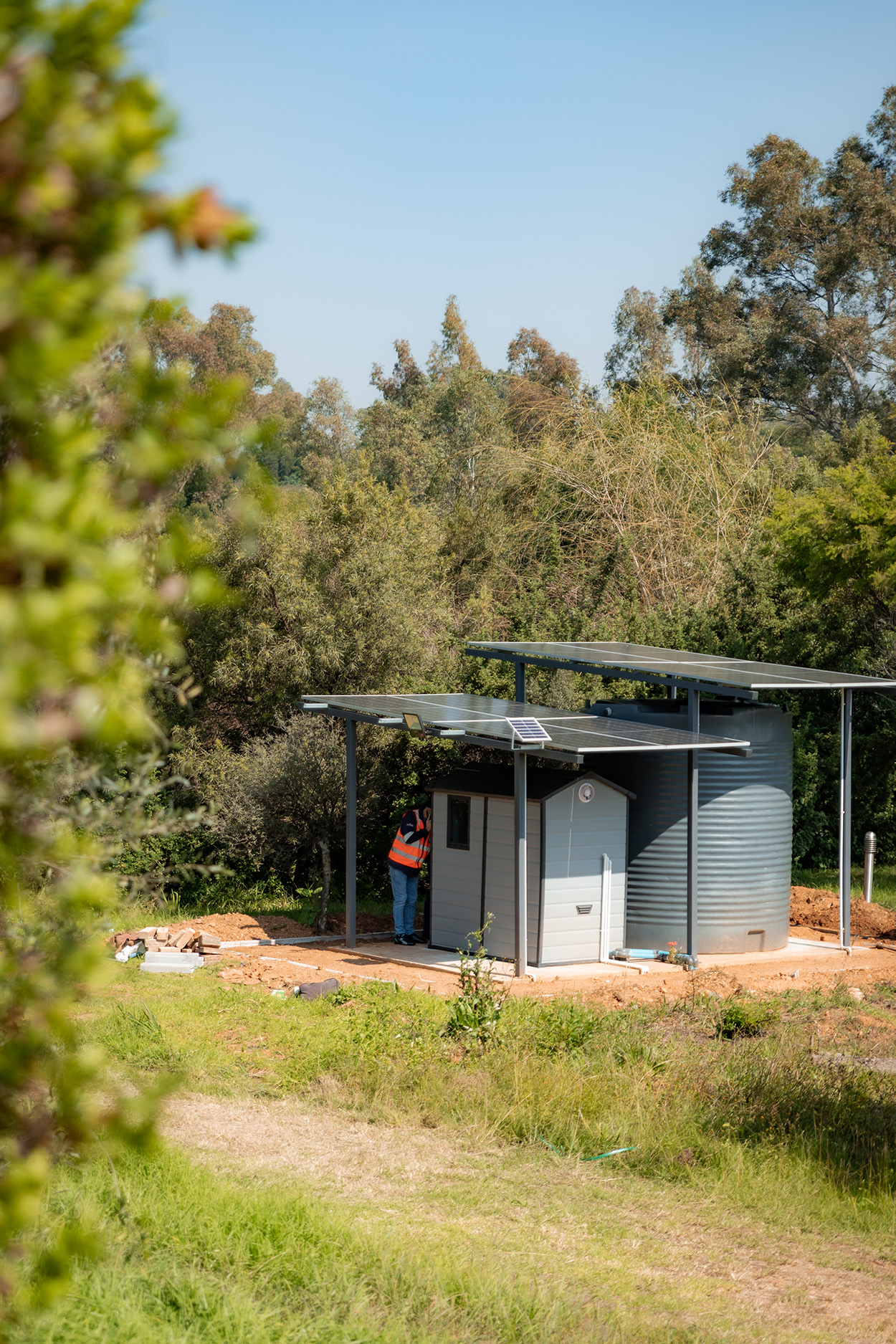
This creates a dual pressure that solar-powered water systems are uniquely positioned to address. By integrating solar photovoltaic energy with water pumping, treatment, and storage infrastructure, healthcare facilities can maintain water supply independently of both the municipal network and the electricity grid — without the ongoing fuel costs and maintenance demands of diesel generation.
South Africa's Department of Health has acknowledged the importance of this transition. In communications reported by Issuu, the Health Minister confirmed that solar energy is being prioritised for critical healthcare areas including theatres, ICUs, and high-tech equipment — with renewable energy embedded generation seen as essential to reducing operating costs while securing supply quality.
What Solar-Powered Water Systems Deliver for Healthcare Facilities
A well-designed solar-powered water system for a healthcare facility is not simply a solar panel connected to a pump. It is an integrated infrastructure solution that addresses water sourcing, treatment, storage, pressure management, and quality compliance as a single, coherent system.
Continuous Water Supply During Grid Outages
Solar-powered pumping systems — particularly when paired with battery storage or hybrid configurations — ensure that water continues to flow even when the grid goes down. For a hospital or clinic, this means patient care, sterilisation, and hygiene protocols are maintained without interruption, regardless of load shedding stage or municipal supply disruptions.
Groundwater Access Through Solar Borehole Pumping
Combining borehole drilling with solar-powered pump systems gives healthcare facilities access to a private groundwater source that operates entirely independently of municipal supply. This is particularly valuable for facilities in areas where municipal infrastructure is under strain or where supply consistency is variable. The borehole provides the source; solar energy powers the extraction; and a correctly sized storage system ensures availability at all times.
SANS 241-Compliant Water Treatment
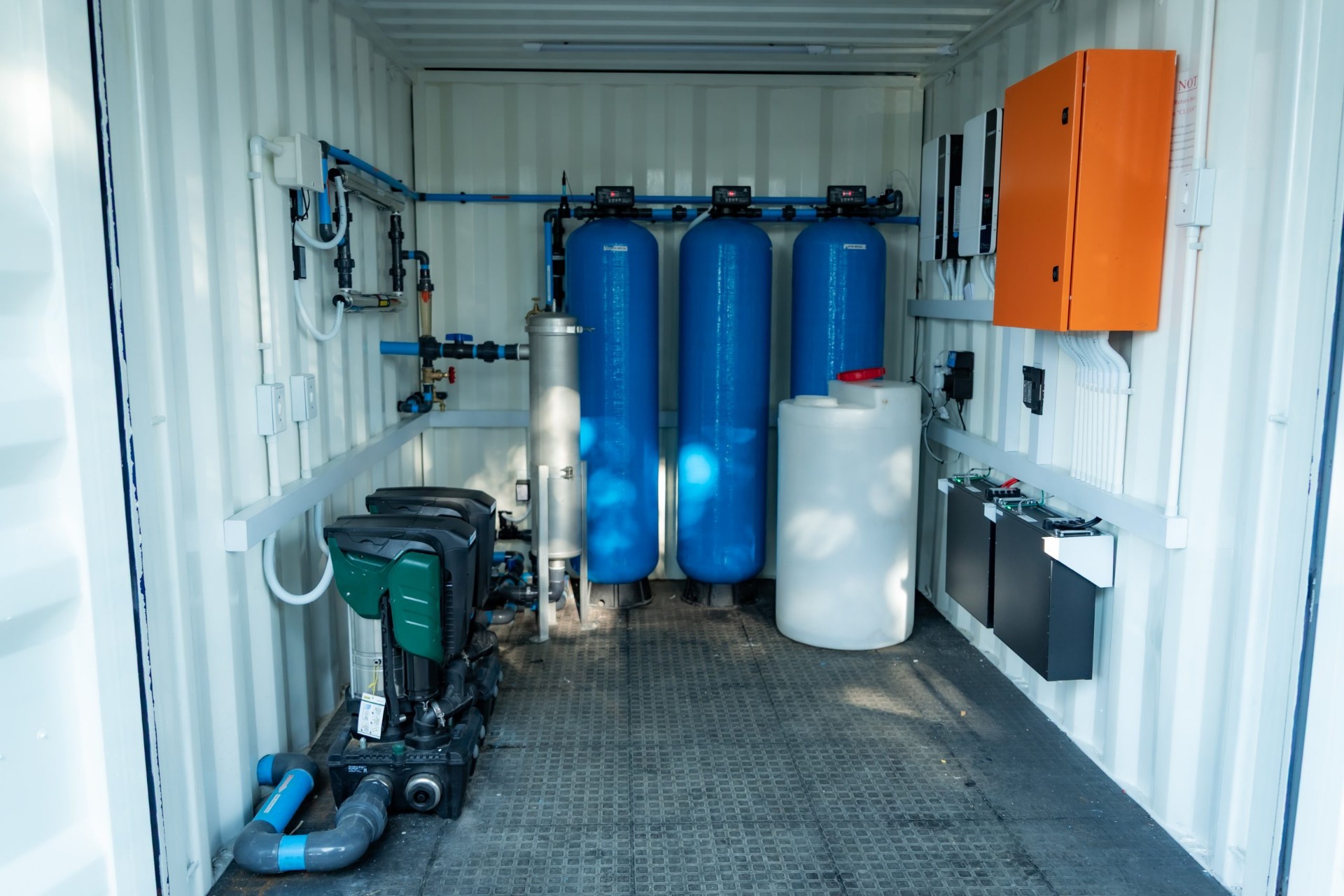
Water sourced from boreholes or alternative supplies must meet SANS 241 standards before it is suitable for clinical use. Solar-powered systems can integrate directly with water treatment and purification solutions — including filtration, disinfection, and UV treatment — ensuring that the water delivered to clinical areas, sterilisation units, and patient facilities is fully compliant and safe. As iWater Management's own published research notes, containerised water treatment systems paired with solar backup maintain treatment continuity during load shedding, delivering SANS 241-compliant water regardless of grid status.
Reliable Hot Water for Sterilisation and Patient Care
South Africa's 696 hospitals have a combined annual hot water energy demand of between 312 and 336 GWh, according to research by Stellenbosch University's Centre for Renewable and Sustainable Energy Studies. Solar thermal and photovoltaic-thermal (PV-T) systems can address a significant proportion of this demand — with one South African hospital reported to have achieved 70% of its annual hot water demand from PV-T systems, rising to 100% during summer months. Reliable hot water delivery supports sterilisation, patient bathing, and food preparation — all critical clinical functions.
Modular Storage for Supply Continuity
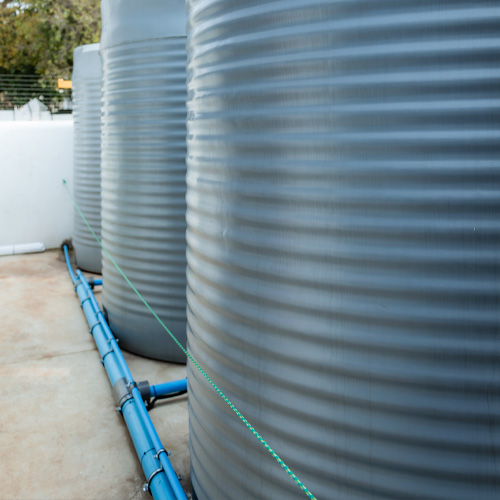
Bulk water storage is an essential component of any resilient healthcare water system. Modular steel water tanks allow facilities to maintain a strategic reserve that bridges supply gaps — whether from borehole yield fluctuations, treatment system maintenance, or temporary pump downtime. Appropriately sized storage ensures that clinical operations are never dependent on real-time water flow from a single source.
Designing Solar Water Systems for Healthcare — Key Considerations
Healthcare facilities have water requirements that differ significantly from residential or commercial properties. System design must account for the specific demands of a clinical environment to ensure consistent performance and compliance.
Continuous operation — Healthcare facilities require 24-hour water access. System design must incorporate battery backup, hybrid power configurations, or adequately sized storage to maintain supply overnight and during extended low-sunlight periods. Water quality at the point of use — SANS 241 compliance must be verified at the point where water is actually used in clinical processes, not only at the point of entry into the facility's distribution network. Pressure requirements — Multi-storey hospital buildings and facilities with high simultaneous demand require pump systems sized to maintain consistent pressure throughout the building at all times. Redundancy and backup — Clinical environments cannot tolerate single points of failure. System design should incorporate redundant pumps, backup storage capacity, and monitoring systems that alert facility managers to any performance deviation in real time. Maintenance accessibility — Solar and water infrastructure in a healthcare setting must be accessible for routine servicing without disrupting clinical operations. System layout and component selection should prioritise ease of maintenance and rapid response to any technical issues. Regulatory compliance — Healthcare facilities operate under strict regulatory frameworks. Water systems must be designed, installed, and maintained in accordance with applicable standards, including SANS 241, the National Building Regulations, and the Water Services Act.
The Wider Benefits of Solar Water Infrastructure for Healthcare Facilities
Beyond the direct clinical benefits of reliable water supply, solar-powered water systems deliver measurable operational and financial advantages for South African healthcare facilities.
Reduced Operating Costs
Replacing diesel generator-dependent water pumping with solar energy eliminates one of the most significant recurring costs associated with load shedding contingency planning. The long-term energy savings from solar-powered pumping and treatment systems compound over the life of the installation, redirecting budget toward patient care and clinical services.
Environmental Sustainability
Healthcare facilities account for an estimated 4.4% of global carbon emissions. Transitioning water and energy infrastructure to solar reduces a facility's environmental footprint — an increasingly important consideration for private healthcare groups and publicly funded institutions alike as sustainability reporting requirements evolve.
Operational Resilience
A healthcare facility with independent water and energy infrastructure is a more resilient institution. It is better positioned to maintain services during municipal supply events, grid instability, and other external disruptions — and better able to focus clinical resources on patient care rather than infrastructure contingencies. iWater Management's water monitoring and compliance services provide the ongoing oversight needed to maintain system performance and ensure regulatory compliance is sustained over the long term.
Frequently Asked Questions
Why do hospitals and clinics need dedicated water systems beyond municipal supply?
Healthcare facilities depend on water for patient care, sterilisation, hand hygiene, food preparation, and medication handling. Municipal supply interruptions and load shedding-related pump failures create direct clinical risk. A dedicated, independent water system ensures these functions continue without interruption regardless of external supply conditions.
Can solar-powered water systems maintain supply overnight and during extended load shedding?
Yes. Solar-powered water systems designed for healthcare applications incorporate battery backup, adequately sized storage tanks, and where necessary, hybrid power configurations that maintain system operation outside daylight hours and during extended grid outages. System sizing is determined by the facility's daily water demand profile and autonomy requirements.
Does borehole water meet the quality standards required for clinical use?
Borehole water must be tested against SANS 241 standards and treated appropriately before it is suitable for clinical use. When correctly tested and treated, borehole water can fully meet the quality requirements for healthcare environments. iWater Management designs integrated borehole, treatment, and solar systems that deliver SANS 241-compliant water for clinical applications. Learn more about our water treatment solutions.
How much can a solar-powered water system reduce a healthcare facility's operating costs?
Operating cost savings depend on the facility's current water and energy configuration, daily consumption volumes, and the extent of solar and storage infrastructure installed. For facilities currently relying on diesel generators during load shedding — some spending up to R800,000 per month on fuel — solar integration can deliver significant and sustained savings over the life of the system.
What is involved in a solar-powered water system installation for a hospital?
A comprehensive installation for a healthcare facility typically includes a hydrogeological site assessment and borehole drilling, solar array design and installation, pump selection and commissioning, water treatment system integration, modular storage tank installation, pressure system configuration, and ongoing monitoring and compliance management. iWater Management manages the full process as a single integrated project.
Secure Your Healthcare Facility's Water Supply Today
iWater Management designs and installs solar-powered water systems for hospitals, clinics, care centres, and healthcare facilities across South Africa — combining borehole drilling, solar pumping, SANS 241-compliant treatment, modular storage, and ongoing monitoring into a single, fully managed water solution. Contact our team to discuss your facility's requirements.
Contact us today: hello@iwatermanage.co.za | Tel: 010 026 4225 | Get in touch