South Africa is facing a water infrastructure emergency. The Department of Water and Sanitation has confirmed that it will cost an estimated R400 billion to repair and upgrade the country's failing municipal water systems — a figure that underscores just how serious the situation has become.
For businesses, property owners, residential estates, and industrial facilities across the country, this isn't an abstract government problem. It's a day-to-day operational reality. Water outages are becoming longer, more frequent, and less predictable. And the communities and sectors that wait for government to solve the problem are the ones that will suffer most.
This article unpacks the reality behind South Africa's water crisis, what's driving it, and — most importantly — what practical steps property owners and businesses can take right now to protect their water supply.
Understanding the Scale of South Africa's Water Infrastructure Crisis
The R400 billion figure isn't a projection — it's the government's own assessment of what it will take to fix what's already broken. According to Daily Maverick, the Department of Water and Sanitation Director-General Dr Sean Phillips confirmed that the backlog covers not just fixing broken infrastructure, but routine and preventative maintenance that has been neglected for decades.
The numbers tell a stark story. Close to half — 47.4% of all municipal water in South Africa is lost as so-called non-revenue water. This includes water lost through leaking pipes, illegal connections, non-functional meters, and poor billing systems. In practical terms, nearly half of all treated water never reaches a paying consumer.
At the same time, the Green Drop report revealed that 39% of municipal wastewater systems are in a critical state, with 90 out of 144 water service authorities having at least one system discharging partially treated or untreated sewage into rivers. Criminal cases have been opened against 56 municipalities for contraventions of the National Water Act. As BusinessTech reports, the proportion of municipal water systems failing basic microbiological standards has jumped from just 5% in 2014 to 46% in 2023. The system is not slowly deteriorating — it is deteriorating rapidly.
Why Johannesburg and Gauteng Are at the Centre of the Crisis
While water infrastructure challenges exist across South Africa, Gauteng — and Johannesburg in particular — has become the focal point of the current crisis. As Africa's largest city without a major natural water source, Johannesburg has always depended on engineered infrastructure to deliver water to its residents and businesses. That infrastructure is now under extreme pressure.
Non-revenue water losses in Johannesburg sit at 48.4% — yet the city spends less on repairs and maintenance than any other metro in South Africa. Ageing pump stations, deteriorating pipelines, and rapid population growth have combined to create a situation where supply regularly fails to meet demand.
Areas like Midrand have been particularly hard hit, with prolonged outages disrupting households, schools, and businesses. The city's expansion has outpaced its infrastructure, and full recovery from any significant disruption can take up to ten days.
What This Means for Property Owners, Businesses, and Estates
The implications of this crisis extend far beyond inconvenience. For businesses, water outages mean operational downtime, production losses, and in some cases, temporary closure. For residential estates, they mean residents without water for hygiene, cooking, and sanitation. For healthcare facilities, they represent a direct risk to patient safety.
The Risks of Doing Nothing
Properties and businesses that rely entirely on municipal supply are exposed to risks they cannot predict or control. These include: unplanned water outages lasting hours, days, or in some cases weeks; water quality failures following pipe bursts and system restarts; regulatory non-compliance for facilities with water quality obligations; reputational damage for businesses that cannot maintain normal operations; and financial losses from downtime, emergency water procurement, and equipment damage.
Who Is Most at Risk?
While any property connected to a municipal supply carries risk, certain sectors face heightened exposure. Residential estates and developments are vulnerable where supply failures affect all residents simultaneously. Healthcare facilities depend on clean water for patient safety and sterilisation. Schools and educational institutions face closures and disrupted learning. Industrial and commercial operations see production halted when consistent supply and water quality fail. Farms and agricultural sites rely on reliable access for irrigation, livestock, and processing.
Practical Solutions for Water Security in South Africa
The most effective response to South Africa's water crisis is not to wait for government to fix the problem — it is to build water independence at a property or facility level. Several proven technologies and approaches are available to South African property owners and businesses today.
Borehole Drilling
Borehole drilling provides direct access to groundwater, giving properties a private, sustainable water source that operates independently of municipal supply. Boreholes can supply water for domestic use, irrigation, industrial processes, and more. Learn more about borehole drilling services in South Africa.
Modular Steel Water Tanks
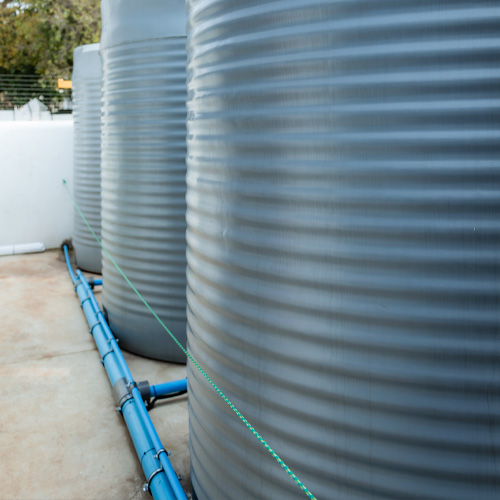
Bulk water storage allows properties to maintain a reserve supply that can bridge gaps during municipal outages. Modular steel water tanks can be scaled to suit any property size and are built for long-term durability in South African conditions.
Solar-Powered Water Systems
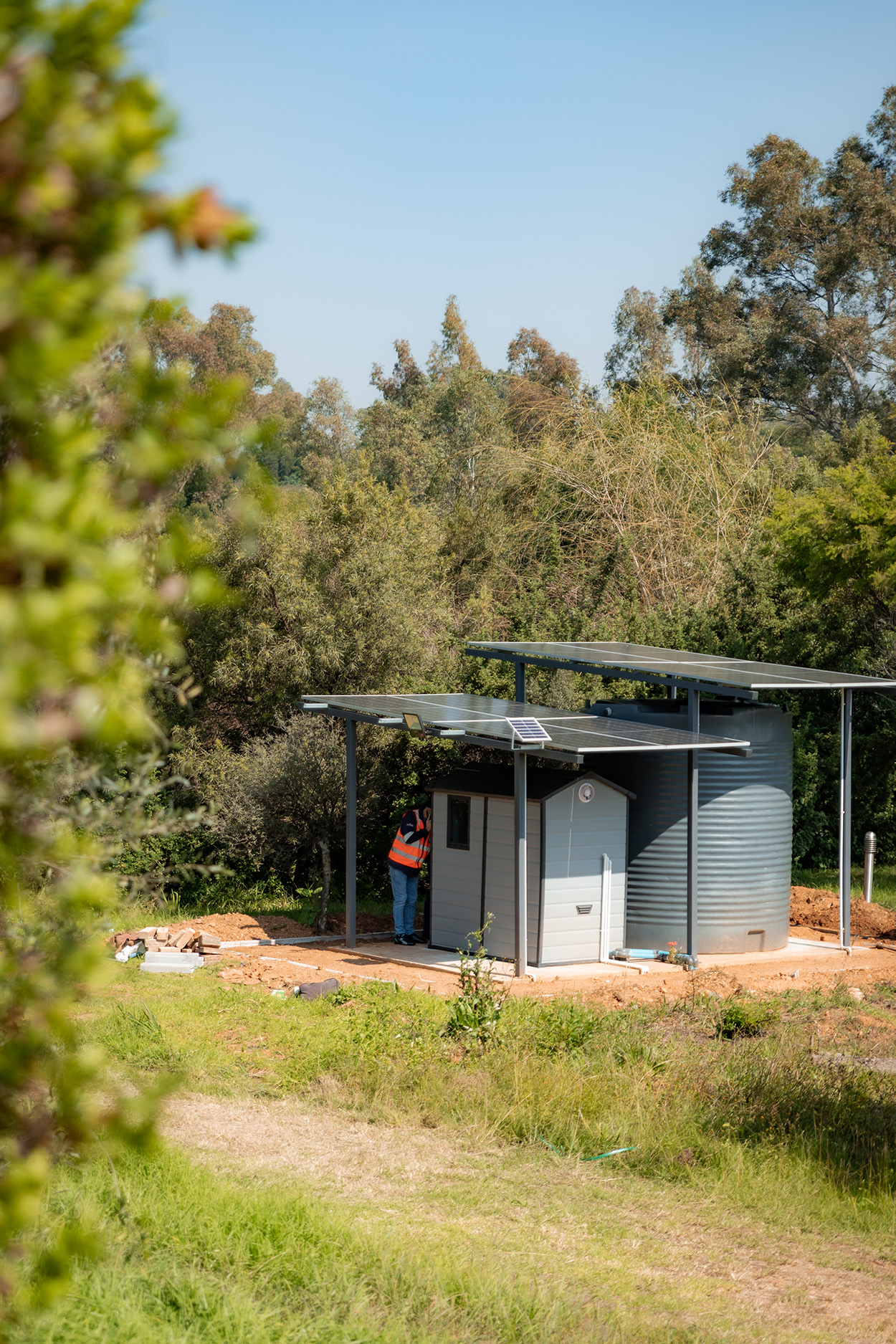
By decoupling water infrastructure from both the electrical grid and the municipal network, solar-powered water systems provide energy-independent water supply. These systems are particularly effective when combined with borehole drilling and storage solutions.
Water Monitoring and Compliance
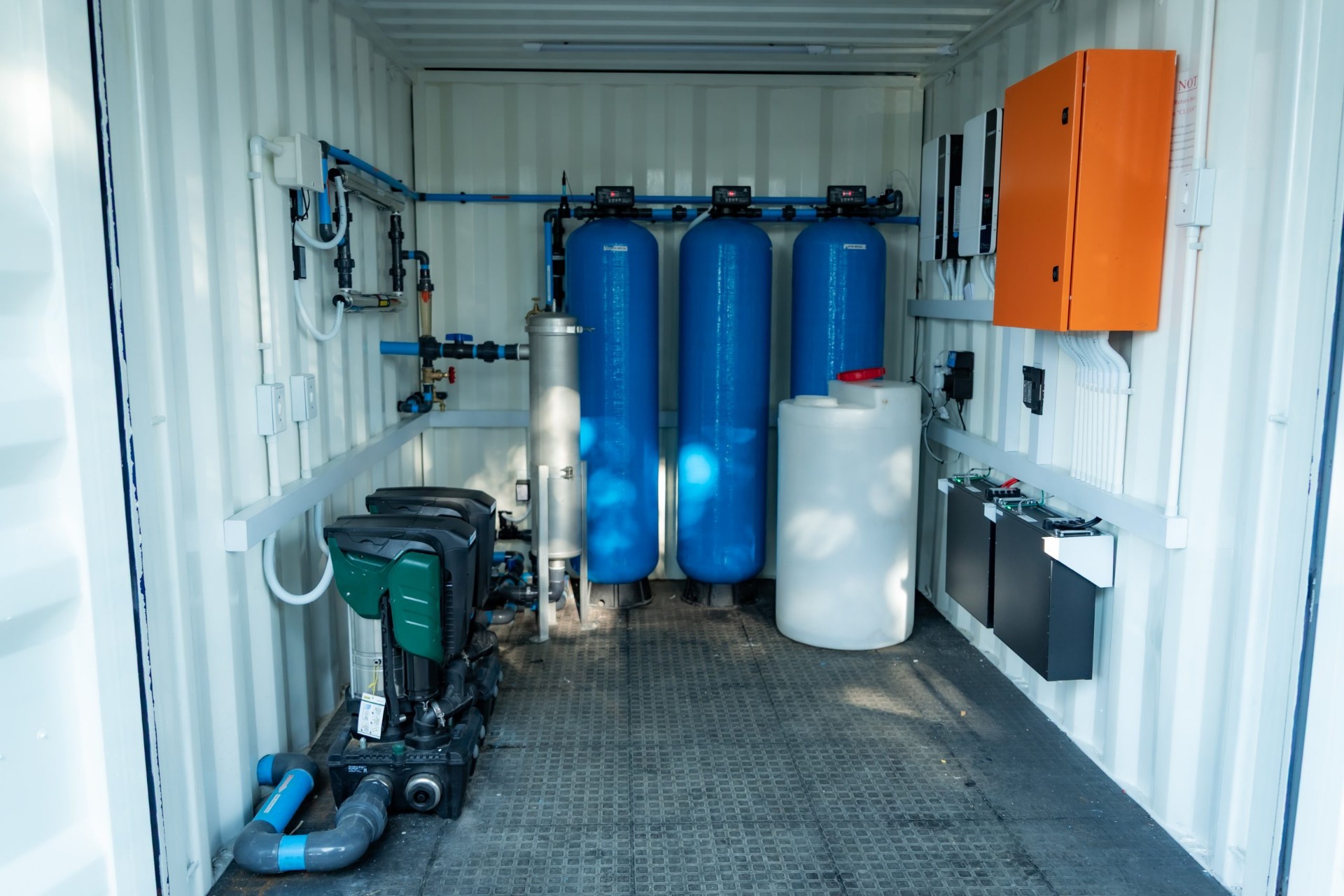
Ongoing water monitoring and compliance services ensure that water quality remains safe and legally compliant, regardless of source. Regular SANS 241 testing provides early detection of quality issues before they become health risks.
The Long-Term Case for Water Independence
South Africa's water infrastructure crisis is not a short-term problem. As Moneyweb notes, even President Ramaphosa's 2026 State of the Nation Address highlighted water security as a defining national priority — yet the government acknowledges it does not have the R400 billion needed to fix the problem in the current fiscal cycle.
For South African businesses and property owners, the message is clear: the most responsible and practical step is to invest in on-site water security now. Properties that have done so are already experiencing the benefits — uninterrupted supply, reduced operational risk, lower long-term water costs, and peace of mind.
The question is no longer whether South Africa's water infrastructure will continue to fail. The question is whether your property is prepared when it does.
Frequently Asked Questions
What is causing South Africa's water crisis?
South Africa's water crisis is driven by decades of underinvestment in municipal infrastructure, poor maintenance, rapid urbanisation, political mismanagement, and the effects of climate change on rainfall patterns and dam levels. The result is a system that is losing nearly half of its treated water and failing to meet basic quality standards.
How much will it cost to fix South Africa's water infrastructure?
The Department of Water and Sanitation estimates a backlog of approximately R400 billion to fix and maintain the country's worst-performing municipal water systems. Only R26 billion was budgeted for water and sanitation in the 2025/26 financial year.
What can property owners do to protect their water supply?
Property owners can invest in borehole drilling, modular water storage tanks, solar-powered water systems, and professional water monitoring and compliance services. These solutions provide water independence that does not rely on municipal infrastructure.
Is borehole water safe to drink?
Borehole water quality varies depending on the location and geology of the site. It must be tested against SANS 241 standards and treated appropriately before being used for drinking or domestic purposes. iWater Management provides full testing, treatment, and compliance services.
How long does a borehole last?
A properly designed, drilled, and maintained borehole system can provide a sustainable water supply for 50 to 80 years. Regular maintenance and monitoring are key to long-term performance.
Ready to Secure Your Water Supply?
Don't wait for the next outage. iWater Management designs and installs complete water security solutions for South African businesses, estates, and properties — from borehole drilling and solar-powered systems to treatment, storage, and compliance. Contact us today to discuss your water security requirements.
Contact us today: hello@iwatermanage.co.za | Tel: 010 026 4225 | www.iwatermanage.co.za