
South African businesses have spent years calculating the cost of load shedding — lost production hours, generator fuel, damaged equipment, and reduced GDP. The methodology for measuring electricity downtime has become sophisticated. The equivalent calculation for water downtime has barely begun. Yet the right question for South African businesses is no longer 'how much does water cost?' — it is 'what will it cost us if we no longer have it?'
Water supply disruptions cost South African businesses far more than the value of the water itself. They create production downtime, force staff to be sent home, trigger compliance failures, damage infrastructure, generate emergency procurement costs, and in some cases cause permanent reputational harm. When Anglo American reported a 9% drop in platinum production at its Rustenburg operations in 2023 from a single five-day water stoppage, it provided one of the clearest illustrations of just how significant a single water event can be for a major operation.
This article breaks down the true cost of water downtime for South African businesses — across direct, indirect, and long-term dimensions — and makes the case for why water independence investment is not an overhead but a measurable, return-generating strategic decision.
Why Water Downtime Is Harder to Manage Than Load Shedding
When load shedding arrived, South African businesses adapted. Generators, UPS systems, and inverters became standard infrastructure for any serious operation. The solutions were imperfect, but they were available, scalable, and deployable within weeks. Water is fundamentally different. If businesses don't have water in their pipes, they do not have backup alternatives in the same way.
There is no water equivalent of a generator that you can switch on in 30 seconds. Water supply disruptions require advance planning, infrastructure investment, and system integration to address. Businesses that have not built water independence before the next major outage cannot simply acquire it on demand. This asymmetry between the ease of adaptation for electricity versus water is precisely why water downtime carries a higher operational risk premium.
PwC South Africa identifies water shortages as one of the most significant domestic business risks for 2025–2026, explicitly advising companies to install backup systems on municipal feeds. This is not language from an environmental report — it is risk management language from one of the world's leading audit and advisory firms.
The Direct Costs of Water Downtime
Production and Revenue Loss
For any business where water is a direct input to production — manufacturing, food processing, brewing, bottling, pharmaceuticals, mining, and data centre cooling — a water outage translates directly into lost output. The Anglo American platinum example is the most publicly documented case, but the pattern repeats across South Africa's industrial base. A five-day outage at a food processing facility producing R500,000 of product per day generates R2.5 million in lost revenue. A three-day outage during a critical production cycle can disrupt an entire month's delivery schedule.
Emergency Water Procurement
When municipal supply fails unexpectedly, businesses that have no on-site storage or alternative supply are forced into the emergency water procurement market — tanker deliveries at rates that can be five to ten times the normal municipal tariff. For large industrial operations requiring hundreds of thousands of litres per day, emergency water procurement is not a viable sustained strategy. It is a crisis measure that creates its own cascading costs.
Staff Downtime and Productivity Loss
For businesses where water is primarily needed for hygiene and sanitation rather than production, the direct cost of a water outage is the loss of staff productivity when employees cannot use ablution facilities and must be sent home. For an office-based business employing 200 people at an average cost of R400 per hour, a four-hour outage generates R320,000 in unproductive salary cost before any other impact is counted.
Equipment and Infrastructure Damage
Certain industrial processes require water flow to protect equipment. Cooling systems, chemical processing lines, and high-temperature manufacturing operations can sustain equipment damage if water supply fails without warning. The cost of repairing or replacing damaged equipment following a water-related incident can far exceed the investment required to prevent it through on-site water independence infrastructure.
The Indirect Costs That Most Businesses Are Not Counting
Compliance and Regulatory Exposure
Businesses in food production, healthcare, hospitality, and other regulated sectors face compliance obligations that require consistent water access. A supply disruption that forces a facility to operate outside its certified conditions — or to pause operations entirely — can trigger audit findings, certification suspensions, and regulatory penalties that create costs long after the water has been restored.
Supply Chain Disruption
Small and medium enterprises represent approximately 40% of South Africa's GDP and employ more than 60% of the workforce. Many operate in high-risk water regions with thin margins and limited reserves. When an SME supplier loses production days to a water outage, the disruption cascades through the supply chains of every larger business that depends on them. The cost of water downtime is not contained within the walls of the affected business.
Reputational and Tenant Impact
For commercial property managers, water outages create direct reputational consequences with tenants. Properties that repeatedly experience water supply failures face tenant dissatisfaction, lease non-renewals, and in competitive markets, reduced rental values. The intangible cost of a reputation for poor building services is difficult to quantify but real and compounding over time.
The Cost of Inaction Compounds
When load shedding intensified, solar and backup power became hot commodities overnight, driving up prices and creating bottlenecks. The same pattern is developing with water infrastructure. Businesses that wait until water is no longer reliably available will find that the infrastructure they need is more expensive, harder to procure, and takes longer to install than it would if they acted proactively today.
The Return on Investment Case for Water Independence
Sites that treat water as a strategic asset consistently outperform those that treat it as an undifferentiated utility cost. The direct benefits of water independence infrastructure include reduced downtime, predictable operating costs, improved audit outcomes, and greater investor confidence. World Bank research in emerging economies indicates that resilience investments deliver benefit-to-cost ratios above 4:1.
For most South African businesses, the investment case for water independence is straightforward when the full cost of downtime is factored in. The combination of a borehole for independent supply, modular storage for continuity, treatment for compliance, and ongoing monitoring for quality assurance typically costs a fraction of the revenue exposure created by even a single significant water outage.
Borehole Drilling — Eliminating Supply Dependency
iWater Management's borehole drilling services provide businesses with a private groundwater source that operates entirely independently of municipal infrastructure. A professionally installed borehole delivers sustainable water access for 50 to 80 years, with annual maintenance costs that represent a small fraction of the revenue protected by supply continuity.
Modular Steel Storage — Bridging Supply Gaps
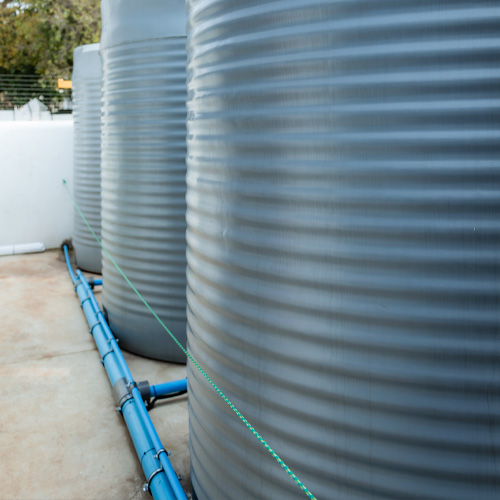
On-site storage is the most immediately deployable investment for reducing water downtime exposure. Modular steel water tanks can be sized to provide between one and seven days of operational reserve, ensuring that even extended municipal outages do not interrupt production or operations.
Solar-Powered Water Systems — Removing the Grid Variable
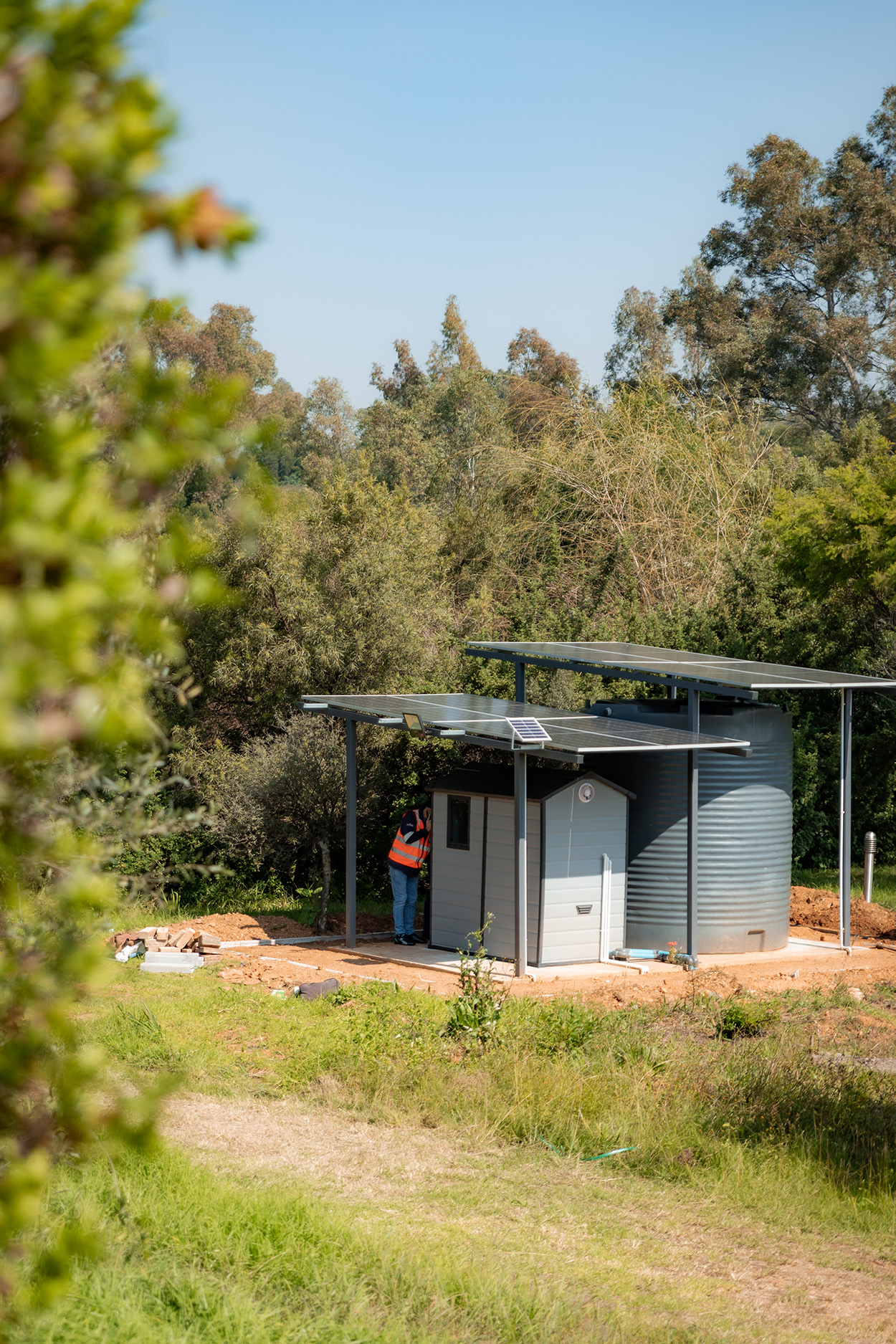
For businesses where load shedding compounds water supply risk by stopping grid-powered pumps, solar-powered water systems remove both dependencies simultaneously. Solar-powered borehole pumping continues operating during grid outages, filling storage tanks through daylight hours regardless of Eskom's schedule.
Water Monitoring and Compliance — Protecting Quality Continuously
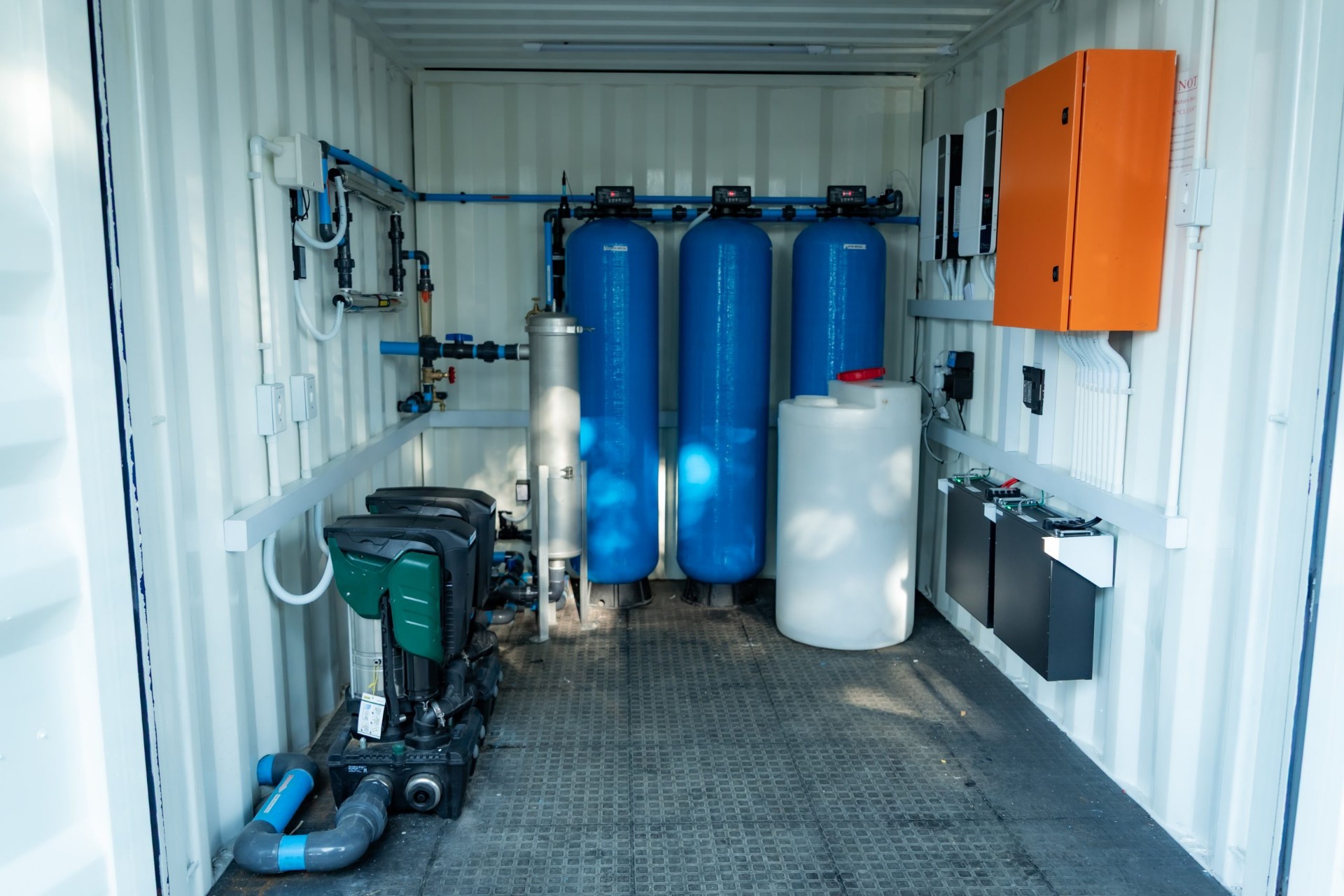
iWater's water monitoring and compliance services ensure that water quality is maintained and documented throughout the system, protecting businesses from the compliance and liability exposure that follows undetected quality deterioration.
Frequently Asked Questions
What is the most significant cost of water downtime for South African businesses?
For production-intensive businesses, lost revenue from halted manufacturing or processing is typically the largest direct cost. For office-based and service businesses, staff downtime and productivity loss dominate. Across all sectors, indirect costs including compliance exposure, supply chain disruption, reputational impact, and emergency procurement significantly amplify the direct financial impact of any water outage.
How does water downtime compare to load shedding in terms of business impact?
Water downtime is generally more damaging than an equivalent load shedding event because there is no widely available equivalent to a generator for water supply. Load shedding has workable backup solutions that most businesses have already implemented. Water supply failure, for businesses that have not invested in on-site water infrastructure, typically results in complete operational shutdown with no short-term alternative.
What is the ROI on water independence infrastructure for South African businesses?
The return on investment depends on the business's daily revenue, water dependency, and the frequency and duration of supply disruptions in their area. For businesses in Gauteng and other high-disruption regions, the payback period on a complete water independence system — borehole, storage, treatment, and monitoring — can be measured in months rather than years when the full cost of downtime is included in the calculation.
How long does it take to build water independence for a commercial operation?
A complete water independence system for a commercial or industrial operation — covering site assessment, borehole drilling, storage tank installation, treatment commissioning, and monitoring setup — typically takes 8 to 16 weeks from initial assessment to commissioning. iWater Management manages the entire process, including permitting and stakeholder notifications.
Should water infrastructure investment be treated as capex or opex?
Water independence infrastructure is a capital investment that delivers ongoing operational cost reduction and risk mitigation. It is appropriately treated as capex with a defined payback period and long-term asset life. South Africa's Section 12B tax allowance for renewable energy assets, which includes solar-powered water systems, provides an additional financial incentive for businesses investing in solar-integrated water infrastructure.
Eliminate Water Downtime Risk for Your Business Today
iWater Management designs and installs complete water independence systems for South African businesses — from borehole drilling and solar-powered pumping through to SANS 241-compliant treatment, modular storage, and ongoing monitoring. Contact our team to discuss your water security requirements and get a clear picture of the investment and return for your operation.
Contact us today: info@iwatermanage.co.za | Tel: 010 026 4225 | Get in touch