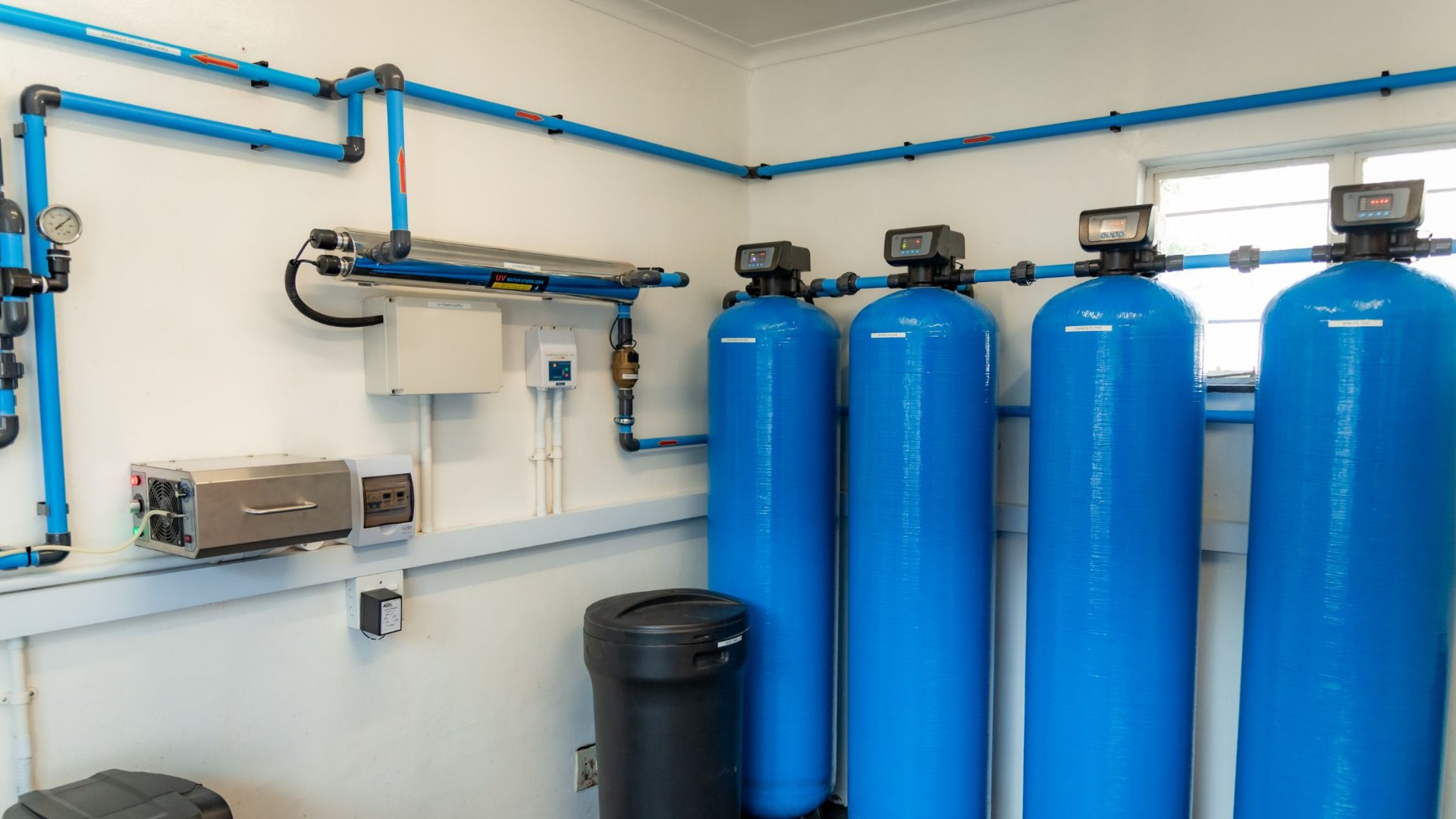
Water treatment is one of the most misunderstood areas of water management in South Africa. Many property owners, estate managers, and business operators know they need treated water — but are uncertain which technology is appropriate for their specific source, application, and quality requirement. The result is often an undersized system that fails to deliver compliant water, or an over-engineered solution that costs more to run than necessary.
The right water treatment system depends entirely on three things: what is in your source water, what you need the treated water to do, and what volume you require. A borehole in the Northern Cape with high iron content requires a completely different treatment approach from a rainwater harvesting system on a Cape Town estate, which in turn is different from a river abstraction point on a Limpopo farm. There is no universal solution — but there is a structured framework for identifying the right one.
This guide explains the core water treatment and purification technologies available in South Africa, what each one addresses, which contaminants it removes, and which applications it is best suited to. By the end, you will have a clear picture of how these technologies work together to deliver SANS 241-compliant water from virtually any source.
Why Water Treatment Is Essential for South African Properties and Businesses
South Africa's water landscape is diverse and complex. Across the country, properties draw water from municipal supply, boreholes, rivers, farm dams, rainwater harvesting systems, and blended combinations of multiple sources. Each of these sources carries its own quality profile — and none of them can be assumed to meet SANS 241:2015 — South Africa's national drinking water standard — without testing and, in most cases, treatment.
The consequences of using untreated or inadequately treated water extend beyond health risk. Microbiological contamination causes illness. Elevated iron and manganese foul irrigation systems and stain surfaces. Corrosive water damages pipes, geysers, and industrial equipment. High total dissolved solids affect the taste, quality, and safety of water used in food production and beverage manufacturing. And for businesses with compliance obligations under the Occupational Health and Safety Act, the National Health Act, and sector-specific food safety regulations, the legal exposure from failing to provide SANS 241-compliant water is significant.
Water treatment is not an optional upgrade — it is the foundational step that converts a water source into a safe, compliant, and operationally reliable supply.
The Core Water Treatment Technologies Available in South Africa
1. Sediment and Multimedia Filtration
Sediment filtration is typically the first stage in any water treatment train. It removes suspended solids, turbidity, sand, silt, and particulate matter from source water before it reaches more sensitive downstream treatment components. Multimedia filters use layered media — typically a combination of gravel, sand, and anthracite — to capture particles of varying sizes as water passes through the bed.
What it removes — suspended solids, turbidity, sand, silt, sediment, some organic matter. What it does not remove — dissolved chemicals, heavy metals, bacteria, viruses, or dissolved minerals. Best suited to — borehole water with high turbidity, river and dam abstraction, pre-treatment before RO or ultrafiltration, irrigation water supply. Typical South African application — pre-treatment stage in agricultural, industrial, and residential treatment systems; essential where source water carries visible turbidity or sediment load.
2. Iron and Manganese Removal
Elevated iron and manganese are among the most commonly encountered water quality issues in South African borehole water. Iron above 0.3 mg/L causes reddish-brown staining of surfaces and fixtures, and fouls drip irrigation emitters. Manganese above 0.1 mg/L causes black staining and can affect the taste and odour of water. Both parameters have defined limits under SANS 241.
What it removes — dissolved and particulate iron, manganese, hydrogen sulphide. Treatment approach — oxidation followed by filtration, using aeration, chlorine dosing, or catalytic media depending on iron/manganese concentrations and the presence of other parameters. Best suited to — boreholes in the Highveld, Limpopo, Northern Cape, and other regions where iron-rich geology is common; irrigation systems where fouling of emitters is a recurring maintenance problem.
3. Activated Carbon Filtration
Activated carbon filtration uses highly porous carbon media to adsorb organic compounds, chlorine, chloramines, taste and odour compounds, and certain pesticides from water. It is commonly used as a polishing stage after disinfection to remove residual disinfectant before water is bottled, used in food production, or supplied for drinking. As Ecotech Hydro Technologies confirms, activated carbon is highly effective at removing chlorine and improving aesthetic water quality parameters.
What it removes — chlorine, chloramines, taste and odour compounds, some organic chemicals, certain pesticides and herbicides. What it does not remove — heavy metals, dissolved minerals, nitrates, bacteria, or viruses. Best suited to — post-disinfection polishing for drinking water; food and beverage production where chlorine taste or odour is unacceptable; point-of-use drinking water systems.
4. Ultrafiltration (UF) Membranes
Ultrafiltration uses semi-permeable hollow-fibre membranes with pore sizes in the range of 0.01 to 0.1 microns to physically remove suspended solids, bacteria, and some viruses from water. UF membranes provide reliable microbiological treatment without the use of chemicals, making them well suited to applications where chemical dosing is undesirable or impractical.
What it removes — suspended solids, bacteria, protozoa, some viruses, colloids, high-molecular-weight organics. What it does not remove — dissolved salts, minerals, heavy metals, nitrates, or small viral particles. Best suited to — pre-treatment before reverse osmosis; treatment of river and dam water with microbiological load; containerised treatment systems for remote or agricultural deployments.
5. Reverse Osmosis (RO)
Reverse osmosis is the most comprehensive water purification technology available for point-of-use and centralised treatment applications. RO forces water through semi-permeable membranes at pressure, removing 97 to 99% of total dissolved solids including heavy metals, nitrates, fluoride, sulphates, chlorides, arsenic, and lead. It also removes bacteria and viruses. As Ecotech Hydro Technologies' RO specifications confirm, RO systems range from 70 litres per hour for residential applications to 5,000 litres per hour for industrial systems, with containerised configurations available for remote deployments.
What it removes — dissolved salts, heavy metals, nitrates, fluoride, arsenic, lead, sulphates, chlorides, most organic compounds, bacteria, viruses. What it does not remove — dissolved gases such as carbon dioxide; requires pre-treatment to protect membranes from fouling. Best suited to — high-TDS borehole water in coastal or arid areas; water with elevated heavy metals or nitrates; food and beverage production requiring high-purity process water; pharmaceutical and laboratory applications; desalination of brackish or saline water.
6. UV Disinfection
Ultraviolet disinfection uses UV-C light at 254 nanometres to penetrate the cell membranes of bacteria, viruses, and protozoa, disrupting their DNA and preventing reproduction. UV achieves a 99.9% reduction in microbiological load without adding any chemicals to the water, and leaves no residual disinfectant taste or odour. It is widely used as the final disinfection stage in treatment systems that have already addressed turbidity and particulate matter through upstream filtration.
What it inactivates — bacteria including E. coli and coliforms, viruses, Cryptosporidium, Giardia, and most waterborne pathogens. What it does not remove — dissolved chemicals, heavy metals, nitrates, or suspended solids; requires adequate pre-treatment to ensure UV penetration through clear water. Best suited to — final disinfection stage in residential, commercial, agricultural, and healthcare water systems; borehole water with microbiological parameters above SANS 241 limits; food production and hospitality water where chemical disinfectants are undesirable.
7. Chemical Dosing and Chlorination
Chemical dosing systems introduce controlled quantities of disinfectant — typically sodium hypochlorite (bleach), chlorine dioxide, or other approved disinfectants — into the water stream to achieve microbiological treatment and maintain a residual disinfectant level throughout the distribution system. Chlorination is the most widely used disinfection method in South Africa and the primary technology used in municipal water treatment.
What it addresses — microbiological contamination; provides residual protection against recontamination in distribution systems and storage tanks. Considerations — chlorine reacts with organic matter to form disinfection by-products (DBPs) including trihalomethanes, which have their own SANS 241 limits; activated carbon post-treatment can remove residual chlorine taste and odour at point of use. Best suited to — large-volume water systems requiring residual disinfection protection; stored water in tanks and reservoirs; systems where microbiological risk is ongoing rather than at a single treatment point.
8. pH Correction and Water Conditioning
Water that is too acidic (low pH) is corrosive and will attack metal pipes, geysers, and appliances over time. Water that is too alkaline (high pH) can cause scale build-up and affect the effectiveness of disinfection. pH correction systems use dosing of alkali (typically soda ash or lime) or acid to bring water within the SANS 241 acceptable range of 5 to 9.7.
What it addresses — pH imbalance, corrosivity, scale formation, water stability. Best suited to — borehole water in areas with naturally acidic groundwater; water that has passed through RO (which typically lowers pH); systems where infrastructure corrosion is a concern.
Matching Treatment Technology to Water Source and Application
No single treatment technology addresses all water quality parameters. Effective water treatment systems are designed as treatment trains — a sequence of technologies that each address specific parameters, working together to deliver water that meets the required standard for its intended use.
Borehole Water
Borehole water in South Africa commonly requires sediment filtration, iron and manganese removal, pH correction, and UV disinfection as a minimum treatment train. Where TDS is elevated — particularly in coastal, arid, or high-mineral geology areas — reverse osmosis is added. Full SANS 241 analysis before system design ensures the treatment train is matched to actual water quality rather than assumed parameters.
River and Dam Water
Surface water sources typically carry higher microbiological load, seasonal turbidity variation, and the risk of agricultural chemical contamination. Treatment trains for river and dam water typically include coagulation and flocculation, multimedia filtration or ultrafiltration membranes, and UV disinfection or chlorination. Where agricultural chemicals or herbicides are a concern, activated carbon is added.
Municipal Supply Backup and Storage
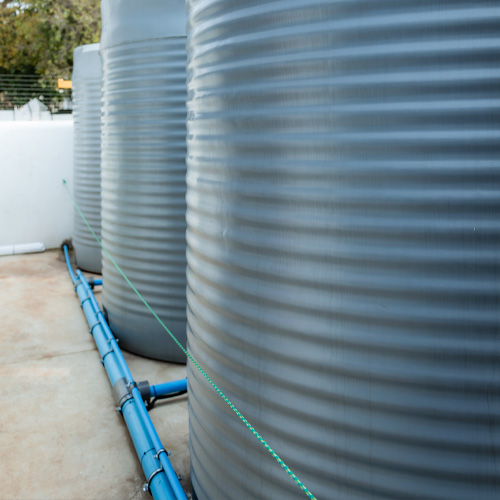
Water stored in tanks following municipal supply can deteriorate in quality over time. UV disinfection and periodic chlorination maintain water quality in storage. Where the municipal supply quality is inconsistent following outages or pipe events, a treatment stage prior to storage provides additional protection.
Rainwater Harvesting
Harvested rainwater from roof catchments typically requires sediment filtration to remove particulate matter, activated carbon to address taste and organic compounds, and UV disinfection for microbiological safety before use for drinking or food preparation. Rainwater is generally low in dissolved minerals, making it well suited for applications where soft water is desirable.
How iWater Management Approaches Water Treatment System Design
iWater Management designs water treatment systems as complete solutions rather than individual component sales. Every system begins with a comprehensive water quality assessment that identifies the specific parameters present in the source water and the quality requirements of each intended application. This analysis drives the treatment train design, ensuring that every component serves a defined purpose and that the system delivers SANS 241-compliant water from the first day of operation.
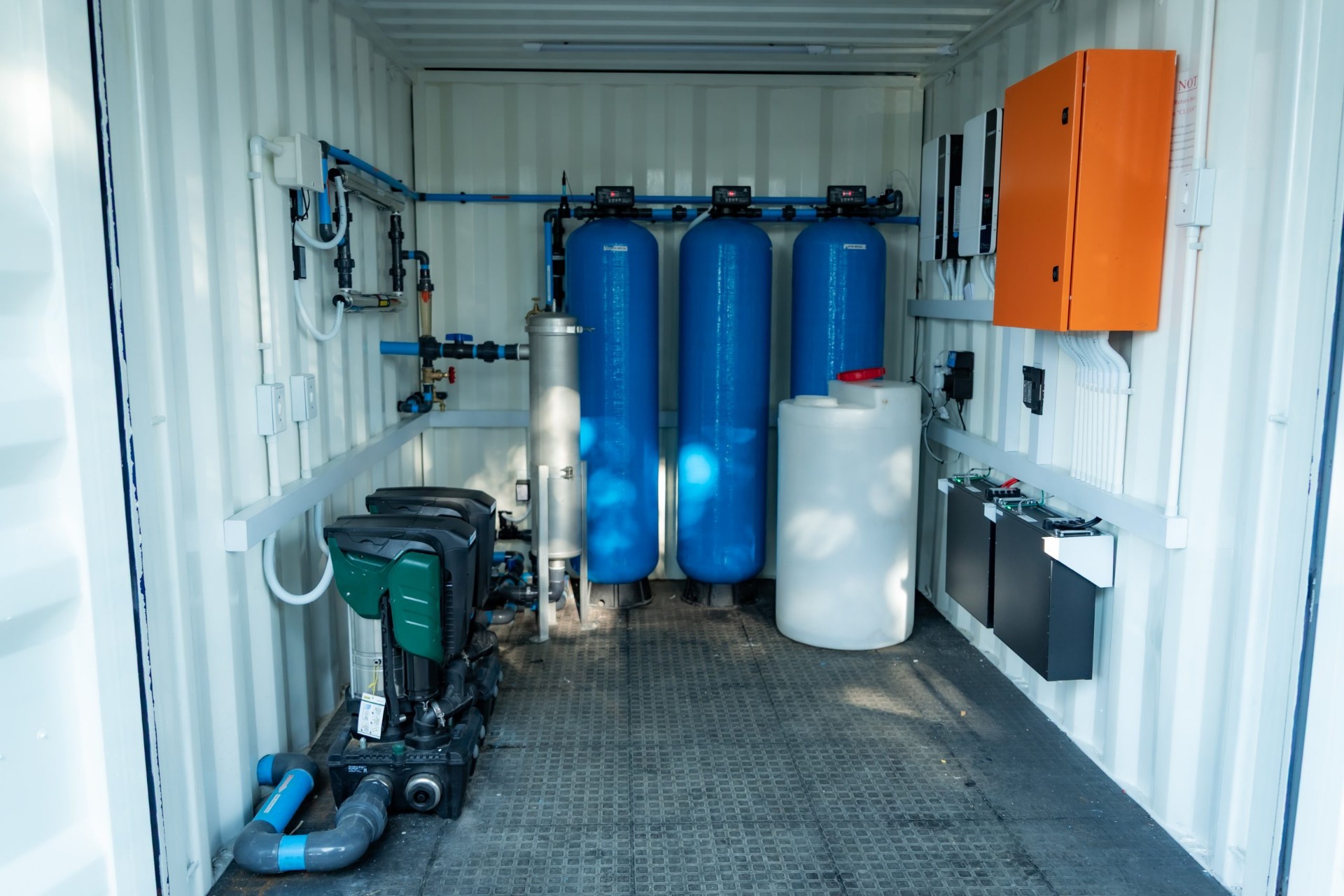
iWater's water treatment and purification solutions span the full range of treatment technologies described in this guide — from sediment filtration and iron removal through to reverse osmosis, UV disinfection, and pH correction — integrated as complete, site-specific systems for residential estates, commercial properties, industrial facilities, agricultural operations, and healthcare environments.
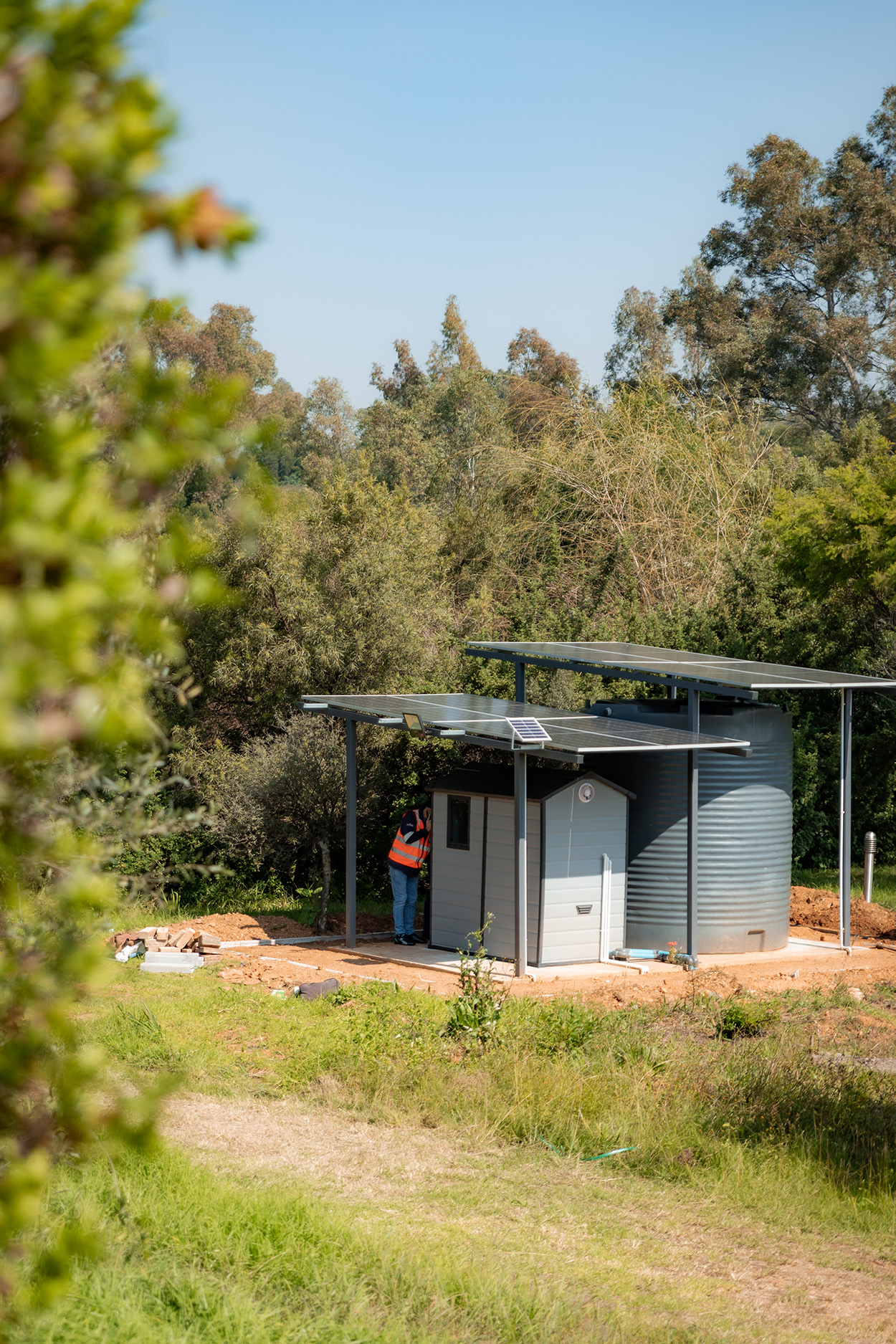
For properties requiring mobile or rapid-deployment treatment capability, iWater's containerised water treatment plants house complete treatment trains within a single shipping container, ready for connection to any water source. Ongoing water quality compliance is supported through iWater's water monitoring and compliance services, ensuring that treatment systems continue to perform at the required standard between scheduled servicing intervals. For properties also investing in independent water supply, iWater's borehole drilling services integrate seamlessly with treatment system design, delivering a complete water independence solution from source to tap.
Frequently Asked Questions
What is the difference between water filtration and water purification?
Filtration physically removes suspended particles and some contaminants from water using media or membranes. Purification is a broader term that encompasses filtration as well as chemical treatment, disinfection, and other processes that address dissolved contaminants, microbiological parameters, and chemical compounds. A complete water treatment system typically combines multiple filtration and purification stages designed around the specific water quality profile of the source.
Does reverse osmosis remove all contaminants from water?
Reverse osmosis removes 97 to 99% of total dissolved solids including most heavy metals, nitrates, fluoride, sulphates, bacteria, and viruses. However, it does not effectively remove dissolved gases such as carbon dioxide, and it requires adequate pre-treatment to protect the membranes from fouling by suspended solids, iron, and biological growth. A complete RO system includes appropriate pre-treatment and, typically, post-treatment pH correction and disinfection.
Is UV disinfection sufficient on its own for borehole water?
UV disinfection is highly effective at inactivating bacteria, viruses, and protozoa, but it only works on water that is sufficiently clear for UV light to penetrate effectively. Turbid water, water with high iron content, or water with suspended solids will reduce UV effectiveness. UV is therefore used as a final disinfection stage after upstream filtration has addressed turbidity and particulate matter — not as a standalone treatment for unfiltered source water.
How do I know which water treatment system is right for my property?
The correct treatment system is determined by a comprehensive SANS 241 water quality analysis of your source water, combined with an assessment of your daily volume requirements and the quality standard needed for each intended use. iWater Management conducts full water quality assessments as the starting point for all treatment system designs, ensuring every system is matched precisely to actual water quality rather than general assumptions.
How often does a water treatment system need to be serviced?
Servicing frequency depends on the treatment technologies installed, the source water quality, and the daily volume treated. As a general guide, sediment filter media requires replacement every 6 to 12 months, activated carbon media every 12 to 24 months, RO membranes every 2 to 5 years, and UV lamps annually. iWater Management's custom maintenance plans provide scheduled servicing programmes matched to each system's specific requirements.
Find the Right Water Treatment System for Your Property
iWater Management designs and installs water treatment and purification systems for residential estates, commercial properties, industrial facilities, agricultural operations, and healthcare environments across South Africa. Every system begins with a full water quality assessment and is designed to deliver SANS 241-compliant water from your specific source. Contact our team to discuss your water quality requirements.
Contact us today: info@iwatermanage.co.za | Tel: 010 026 4225 | Get in touch